
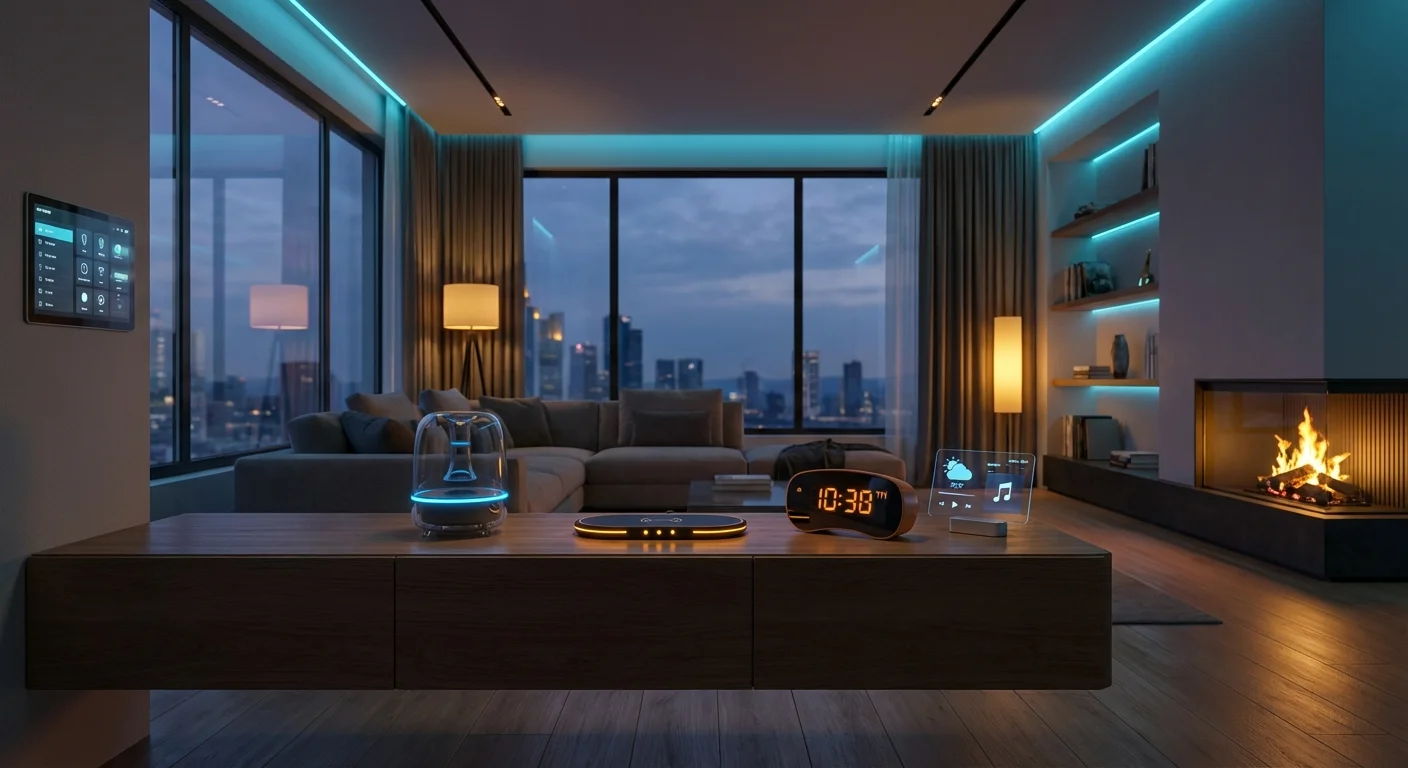
Imagine walking into your house after an exhausting day. The lights automatically adjust to a warm, welcoming glow, your favorite acoustic playlist starts softly playing in the background, and the coffee machine is already brewing a fresh decaf for your evening wind-down. For years, we were led to believe that achieving this level of domestic automation required a Silicon Valley salary, a team of electricians, and a total home renovation. But what if I told you the future of living is already here, and it costs less than a dinner for two?
Welcome to the era of micro-automations. While tech giants are busy marketing $3,000 smart refrigerators that tweet, the real revolution is happening quietly in the background with unassuming, highly affordable devices. We have scoured the depths of the internet, tested dozens of devices, and narrowed down the absolute best hidden gems. Here are five under-the-radar smart home gadgets under $30 that will instantly upgrade your life, saving you time, money, and daily frustrations.
1. The Retrofit Master: Smart Button Pushers
Have you ever looked at your classic, “dumb” coffee maker, your traditional light switches, or that antique fan, and wished they could join your smart home ecosystem? Enter the smart button pusher—a tiny, battery-operated robotic arm that physically pushes buttons and flips switches for you. It sounds almost comically simple, but the implications for your daily routine are profound.
For under $30, these little robots attach to almost any appliance via a strong adhesive. You simply pair them to your phone using Bluetooth or a smart hub, and suddenly, you have voice or app control over devices you thought would never be “smart.” Imagine setting a morning routine where your smart speaker reads you the news while a robotic arm turns on your non-smart espresso machine. It bridges the gap between the analog past and the automated future. Many users attach them to their garage door openers, PC power buttons, or apartment intercom buzzers. The versatility is genuinely mind-boggling, and the installation takes roughly three seconds. No wiring, no screws, no electrical degrees required.
Why It Instantly Upgrades Your Life
Instead of throwing away perfectly good appliances just to buy their “smart” equivalents for hundreds of dollars, you can spend a fraction of the cost to retrofit them. It is environmentally friendly, incredibly budget-conscious, and provides a massive convenience boost. You will find yourself walking around your house looking for things to automate.
2. The Invisible Guardian: Wi-Fi Water Leak Detectors
Water damage is one of the most common and financially devastating issues a homeowner or renter can face. A slow leak under the kitchen sink or a ruptured washing machine hose can cause thousands of dollars in structural damage and ruined belongings before you even notice the puddle. The solution? A gadget that costs less than a decent pizza: the Wi-Fi water leak detector.
These tiny, unassuming pucks can be placed anywhere water might accumulate—behind the toilet, under the dishwasher, near the water heater, or in the basement. They feature sensitive metal probes on the bottom. The exact second these probes come into contact with water, the device screams with a loud built-in siren and simultaneously sends an urgent push notification to your smartphone. Whether you are sleeping upstairs, at the office, or on a beach halfway across the world, you will instantly know there is a problem.
Peace of Mind in the Palm of Your Hand
The real upgrade here isn’t just the prevention of physical damage; it is the absolute peace of mind. You no longer have to feel that lingering anxiety when you leave town. You can integrate these detectors with other smart home systems, too. For example, if a leak is detected, you can set an automation to turn off a smart plug powering your washing machine, or even change all your smart lights to a flashing red to alert anyone in the house. For under $30, it is the cheapest insurance policy you will ever buy.
3. The Mood Maker: App-Controlled TV Backlighting
If you have ever felt a slight headache after binge-watching your favorite series in a dark room, you have experienced digital eye strain. The stark contrast between a blindingly bright television and a pitch-black room forces your pupils to constantly dilate and constrict, causing fatigue. The ultimate fix for this is “bias lighting,” and smart LED light strips designed for your TV are the easiest way to achieve it.
For around $20 to $25, you can get a high-quality, app-controlled LED strip that adheres to the back of your television. Powered directly via your TV’s USB port, these lights turn on and off with your screen. But the magic lies in the smart capabilities. Using your phone or voice assistant, you can choose from millions of colors, adjust the brightness, or set dynamic scenes. Some advanced budget models even use a built-in microphone to pulse and change colors in sync with the audio of your movie, video game, or music.
Transforming Your Living Room
This gadget completely transforms the aesthetic of your living space. It makes a $300 television look like a premium $2,000 home theater setup. The subtle glow bouncing off the wall behind the screen dramatically improves the perceived contrast of your TV, making blacks look deeper and colors look richer, all while protecting your eyes during those marathon gaming sessions or movie nights.
4. The Power Manager: Energy-Monitoring Smart Plugs
We are all familiar with standard smart plugs—the devices that let you turn lamps on and off with your voice. But the real game-changer in this category is the energy-monitoring smart plug. While looking identical to a standard plug, these upgraded versions pack an internal meter that tracks exactly how much electricity the connected appliance is drawing in real-time.
Have you ever wondered if your ancient basement refrigerator is silently running up your electricity bill? Or how much it actually costs to run your space heater during the winter? These plugs provide beautifully detailed graphs and charts right on your smartphone. You can input your local electricity rate, and the app will calculate exactly how many dollars and cents that specific appliance is costing you daily, weekly, and monthly.
Actionable Insights and Savings
Knowledge is power. By identifying energy vampires—devices that drain significant electricity even when turned “off”—you can use the plug’s scheduling feature to cut power to them entirely during the night. Over the course of a year, an energy-monitoring smart plug easily pays for itself, making it one of the few gadgets that actually puts money back into your wallet. Plus, having the ability to check if you accidentally left the curling iron or space heater on while you are halfway to work is priceless.
5. The Lost and Found Savior: Bluetooth Item Trackers
Think about the sheer amount of time you spend looking for misplaced items. Keys, wallets, TV remotes, the dog’s leash—the modern household is a Bermuda Triangle for small necessities. While brand-name trackers get a lot of the spotlight, there are incredibly powerful third-party Bluetooth trackers available for well under $30 that work seamlessly with broader smart home ecosystems like Amazon Alexa and Google Assistant.
You simply attach a small, coin-sized tracker to your easily lost items. When they go missing, you can open an app to make the tracker emit a loud ringing noise. But because this is a smart home upgrade, you can skip the app entirely. Just say, “Alexa, find my keys,” and your smart speaker triggers the tracker’s alarm. Conversely, if you have the tracker but lost your phone, you can double-press the button on the tracker to make your phone ring—even if it is on silent mode.
Reclaiming Your Time
The instant upgrade here is the elimination of panic. That stressful five-minute scramble before you have to leave for work completely vanishes. By integrating these trackers into your daily ecosystem, you streamline your life, lower your blood pressure, and reclaim precious minutes of your day. It is a minor investment for a massive daily return in convenience.
Quick Comparison Table
| Gadget | Primary Benefit | Best Room | Average Cost |
|---|---|---|---|
| Smart Button Pusher | Retrofits dumb appliances | Kitchen / Office | $25 |
| Wi-Fi Leak Detector | Prevents water damage | Bathroom / Basement | $20 |
| Smart TV Backlight | Reduces eye strain | Living Room | $22 |
| Energy-Monitoring Plug | Reduces electric bill | Anywhere | $15 |
| Bluetooth Tracker | Finds lost items instantly | Entryway / Living Room | $25 |
Unlock the Future: Quantum Computing System
If you love cutting-edge smart gadgets, dive deeper into the tech world by discovering how quantum computing systems can revolutionize your digital life and personal tech ecosystem.
How to Start Your Smart Home Journey on a Budget
Diving into the world of smart home technology can initially feel overwhelming, especially with the constant influx of new devices hitting the market every single day. If you are just starting out, the best approach is to identify specific friction points in your daily routine. Do you constantly forget to turn off the coffee pot? Start with an energy-monitoring smart plug. Are you tired of coming home to a dark house? Invest in a smart bulb or a switch pusher. By addressing one small inconvenience at a time, you can organically grow your ecosystem without spending a fortune upfront. Furthermore, it is highly recommended to stick to devices that are compatible with major ecosystems like Amazon Alexa, Google Home, or Apple HomeKit. This ensures that as your collection of gadgets grows, they can all communicate seamlessly with one another, allowing you to create complex routines. Imagine a scenario where saying ‘Goodnight’ locks your doors, turns off the television backlighting, arms your water leak detectors, and activates your smart button pusher to turn on a bedroom fan. The possibilities are virtually endless, and building this interconnected web of automation is half the fun of upgrading your home.
Frequently Asked Questions (FAQ)
Do these gadgets require a central smart hub?
No! The beauty of modern budget smart home gadgets is that most connect directly to your home’s 2.4GHz Wi-Fi network or use Bluetooth. You can control them directly from their respective smartphone apps without needing to invest in an expensive Zigbee or Z-Wave hub.
Are smart home devices secure?
While any internet-connected device carries some risk, you can minimize it by purchasing from reputable brands, using strong, unique passwords for your device accounts, and ensuring your home Wi-Fi network is secured with WPA3 encryption. Always keep your devices’ firmware updated through their apps.
Will adding a lot of smart gadgets slow down my Wi-Fi?
Generally, devices like smart plugs, leak detectors, and LED strips use very little bandwidth. They only transmit tiny packets of data (like an “on” or “off” command). However, if you add dozens of devices, it may clutter your router’s connection limit. Upgrading to a Wi-Fi 6 router or a mesh network can easily handle the load of over 50+ smart devices without breaking a sweat.
Do I need an Alexa or Google Assistant to use these?
Voice assistants enhance the experience, allowing for hands-free control, but they are absolutely not required. Every gadget mentioned comes with a dedicated iOS and Android application that offers full functionality right from your smartphone touchscreen.
Upgrading your life does not require a massive budget. By strategically placing these under-the-radar gadgets around your home, you can create a highly efficient, automated, and secure living environment that simplifies your daily routines. Welcome to the future of smart living!