
The ‘Dumb Phone’ Movement: Why Tech Millionaires Are Ditching Their Smartphones for Good
The Irony of Silicon Valley: Building the Cage and Throwing Away the Key
Imagine inventing a slot machine, placing it in your pocket, and then wondering why you can never seem to focus on your family, your goals, or your own thoughts. For years, the brilliant minds of Silicon Valley have been engineering the most addictive devices known to humanity. They spent billions perfecting algorithms, notifications, and infinite scrolls designed to hack human psychology and harvest attention. Yet, a fascinating and deeply ironic trend has emerged from the very epicenter of the tech world: the creators are abandoning their creations. Tech millionaires, app developers, and venture capitalists are increasingly trading their $1,200 flagship smartphones for $50 ‘dumb phones’. This isn’t just a quirky vintage aesthetic trend; it is a calculated rebellion against the attention economy by the very people who built it. They know the secrets of the code, and their response is to log off completely. If the people who designed the modern digital cage are actively breaking out of it, it begs the question: what do they know that the rest of us are ignoring?
What Exactly is the ‘Dumb Phone’ Movement?
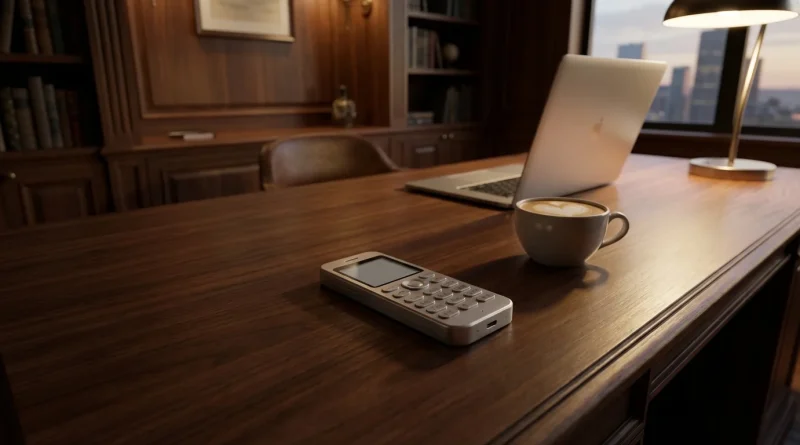
The ‘Dumb Phone’ movement is a rapidly growing subculture of digital minimalists who are intentionally downgrading their mobile technology to reclaim their time, focus, and mental health. A dumb phone, also known as a feature phone, is a basic mobile device that strips away the internet, social media apps, high-end cameras, and push notifications. These devices generally offer only the most fundamental communication features: voice calls and SMS text messaging. Some modern iterations, often called ‘light phones’, might include a basic GPS, a calculator, or an alarm clock, but they deliberately exclude anything that could lead to endless scrolling or dopamine dependency. This movement is a direct counter-culture response to the ‘always-on’ expectation of the 21st century. It is about shifting technology from being a demanding digital master to a quiet, unassuming tool. Brands like Punkt and Light Phone are pioneering this space by creating premium, beautifully designed minimalist phones, proving that choosing a less capable device isn’t about saving money, but about saving one’s mind.
The Insider Secret: Why the Elite Are Leading the Charge
To understand why tech millionaires are abandoning smartphones, you have to understand the business model of modern technology. The product isn’t the phone; the product is your attention. Silicon Valley executives are acutely aware of the metrics used to measure a successful app: ‘Time in App’ and ‘Daily Active Users’. These metrics are achieved through sophisticated psychological manipulation, leveraging the same neural pathways as gambling addiction. Variable reward schedules—the psychological concept behind the slot machine—are baked into the pull-to-refresh motion of your social media feeds. The tech elite know this because they funded it, coded it, and profited from it. Many high-profile figures, including former Facebook executives and Google design ethicists, have spoken out about the profound guilt they feel for contributing to the global mental health crisis. They are switching to dumb phones because they recognize that willpower is a finite resource, and human willpower is simply no match for an artificial intelligence supercomputer pointing at your brain to keep you scrolling. By removing the smartphone, they eliminate the temptation entirely, securing a massive competitive advantage in deep work, strategic thinking, and emotional regulation.
The Astonishing Benefits of Ditching Your Smartphone
Downgrading to a dumb phone yields immediate and profound benefits that touch almost every aspect of daily life. First and foremost is the restoration of attention span. In a world where the average person checks their phone over 140 times a day, the ability to focus on a single task for more than a few minutes has become a superpower. Without the constant ping of notifications, individuals report an ability to read books again, engage in deep, uninterrupted conversations, and perform highly complex tasks with unprecedented clarity. Secondly, mental health sees a drastic improvement. The removal of algorithmic doom-scrolling reduces baseline anxiety and comparison culture, leading to higher levels of life satisfaction. Sleep quality skyrockets when the blue light and stressful emails are removed from the bedroom. Finally, there is the incredible liberation of a battery life that is measured in days or even weeks, rather than hours. The constant low-level anxiety of finding a charger completely disappears.
Smartphones vs. Dumb Phones: A Stark Comparison
When you place the two paradigms side-by-side, the contrast becomes undeniable. Here is a breakdown of how the modern smartphone compares to a minimalist dumb phone.
| Feature | Modern Smartphone | Minimalist Dumb Phone |
|---|---|---|
| Battery Life | 12 to 24 hours (requires daily charging) | 5 to 14 days (charge and forget) |
| Primary Function | Entertainment, consumption, and constant connectivity | Utility, essential communication, and emergencies |
| Distraction Level | Extremely High (constant notifications and infinite scroll) | Near Zero (no apps, no feeds, no pop-ups) |
| Privacy Risk | High (location tracking, data harvesting, microphone access) | Low (minimal data collection, no complex apps) |
| Average Screen Time | 4 to 7 hours per day | 15 to 30 minutes per day |
How to Join the Movement Without Ruining Your Career
One of the biggest hurdles people face when considering a dumb phone is the fear of professional or social suicide. ‘How will I navigate?’, ‘What about my work emails?’, or ‘How will I scan QR codes at restaurants?’ are common, valid concerns. The good news is that you do not have to go completely off the grid to reap the benefits of the dumb phone movement. Many tech executives practice ‘digital compartmentalization’. They use a dumb phone as their primary daily driver for calls and texts, and keep an iPad or a secondary smartphone strictly in their office for necessary apps like banking, ride-sharing, or complex work communications. Another popular method is the ‘Dumbed-Down Smartphone’ approach. If you cannot afford to buy a new device, you can turn your current iPhone or Android into a highly restrictive tool. This involves deleting all social media, news, and entertainment apps, turning the screen to grayscale to remove the dopamine-triggering colors, and installing minimalist launchers that hide colorful icons behind simple text menus. By treating the internet as a physical place you visit—like a desktop computer in an office—rather than a companion that lives in your pocket, you can maintain career efficiency while taking back your personal life.
The Future: Will Smartphones Become the New Cigarettes?
As the dumb phone movement gains mainstream traction, fueled by viral TikTok trends and high-profile endorsements, we are witnessing a broader cultural shift. Society is slowly waking up to the negative externalities of hyper-connectivity. Much like the realization of the health impacts of smoking in the late 20th century, we are currently in the early stages of recognizing the cognitive and social damage inflicted by unregulated screen time. While smartphones will likely never disappear completely due to their immense utility, our relationship with them is poised to change dramatically. In the future, using a smartphone at a dinner table or during a conversation may be viewed with the same social distaste as lighting up a cigarette indoors. The dumb phone movement is not a step backward into the past; it is a conscious step forward into a future where humans control their tools, rather than the other way around.
Frequently Asked Questions (FAQ)
How do I use GPS or banking without a smartphone?
Many digital minimalists choose to keep a secondary device, like an old smartphone without a SIM card or an iPad, at home or in the car to handle necessary utilities like banking and navigation over Wi-Fi. Alternatively, some premium dumb phones, like the Light Phone II, offer basic, text-based navigation tools. For banking, returning to desktop-based online banking at a designated time sets healthy boundaries.
What are the best dumb phones on the market right now?
The market is expanding rapidly. The Light Phone II is highly popular for its sleek, e-ink display and lack of social media. The Punkt MP02 offers a beautifully designed tactile experience focused purely on secure calls and texts. For those on a budget, the Nokia 2720 Flip or the Nokia 3310 re-release provide classic, nostalgic functionality at a fraction of the cost.
Can I still use WhatsApp or Signal on a dumb phone?
It depends on the device. True minimalist phones avoid these apps entirely to prevent group-chat distraction. However, devices running on minimalist operating systems like KaiOS (found in many modern Nokia feature phones) do support basic versions of WhatsApp. The Punkt MP02 also features integrated Signal protocol for secure, encrypted communication without the visual clutter of the smartphone app.
Won’t I be less productive at work without a smartphone?
Surprisingly, most people report a significant increase in productivity. While you may respond to emails slightly slower while in transit, the uninterrupted focus you gain allows for deeper, higher-quality work. Constant connectivity is often mistaken for productivity, but in reality, true productivity requires long stretches of focused attention that smartphones actively destroy.
Is the dumb phone movement just a trend for the rich?
While tech millionaires are highly visible proponents of the movement, replacing a $1,000 device with a $50 flip phone is inherently an accessible choice. The movement is gaining traction across all demographics, particularly among Gen Z, who are exhausted by the pressures of social media and are seeking more authentic, offline experiences.