
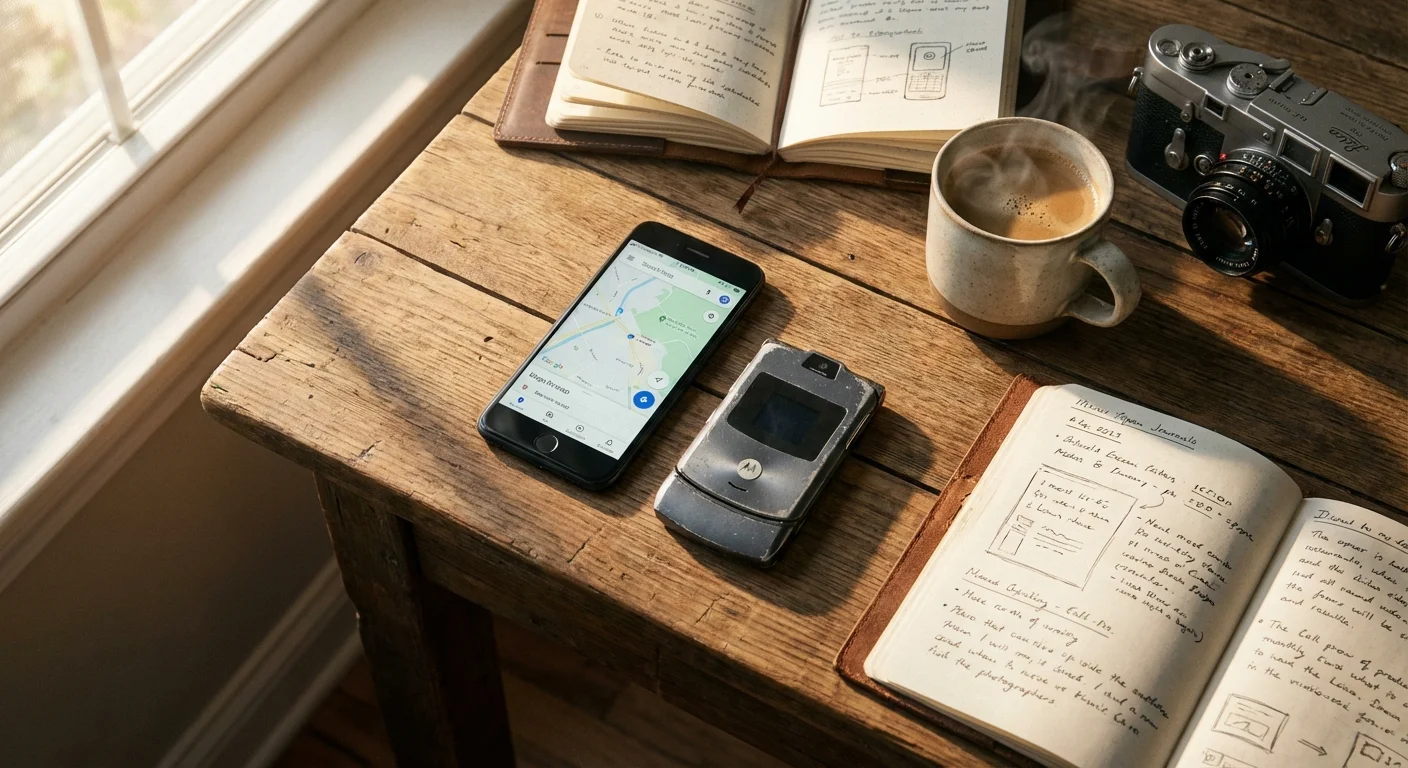
It was 2:14 AM on a random Tuesday. My eyes were burning, my thumb was numb from endless scrolling, and I was deep into a TikTok rabbit hole about competitive dog grooming—a topic I had absolutely zero interest in. I glanced at my iPhone’s Screen Time report: 7 hours and 42 minutes. That was my daily average. I felt a knot form in my stomach. I was spending nearly a third of my life staring at a glowing rectangle, outsourcing my memory, my navigation, and my boredom to an algorithm. It was the breaking point.
The next morning, I made a drastic decision. I took my SIM card out of my $1,200 iPhone 14 Pro, walked over to my desk, and slid it into a $40 Nokia 2720 Flip phone. No touchscreen. No App Store. No Instagram, TikTok, or WhatsApp. Just calls, SMS texts, and an agonizingly slow T9 keyboard. The goal was simple: survive 30 days with a “dumb phone” and see what happened to my brain, my productivity, and my mental health. I expected to be inconvenienced. What I didn’t expect was a complete cognitive rewiring.
Week 1: The Dopamine Crash and The Phantom Limb
The first 72 hours were, to put it mildly, psychological torture. We don’t realize how deeply our smartphones are integrated into our neural pathways until they are gone. On day one, I reached into my pocket to check my phone at least 100 times. Waiting in line for coffee? Reach for the phone. Walking to the mailbox? Reach for the phone. Mid-conversation when there was a three-second lull? Reach for the phone.
My brain was screaming for its regular dopamine drip. Smartphones are essentially slot machines in our pockets; every time we unlock them, we pull the lever hoping for a shiny new notification, a funny video, or a message from a friend. Stripping that away left me with a profound sense of anxiety. I experienced something psychologists call Phantom Vibration Syndrome—my thigh would literally tingle with the sensation of a buzzing phone, even though my cheap plastic Nokia was sitting silently on the table.
The T9 Texting Hurdle
Communicating became incredibly intentional. Have you ever tried typing “I’ll meet you at the restaurant in 15 minutes” using a T9 keypad? It requires patience I hadn’t exercised since 2005. Because texting was suddenly so cumbersome, I stopped sending frivolous messages. If I needed to talk to someone, I just pressed “Call.” Surprisingly, my friends actually picked up. We had five-minute conversations that communicated more emotion and nuance than an entire day’s worth of fragmented text messages.
Week 2: The Return of Boredom (And Why You Need It)
By the second week, the manic urge to check a screen began to fade, replaced by a strange, forgotten emotion: pure, unadulterated boredom. We live in an age where boredom has been completely eradicated. The moment we feel an ounce of under-stimulation, we pacify ourselves with a screen.
Without my iPhone, I was forced to sit with my thoughts. I remember taking a 40-minute train ride into the city. Normally, I would have my AirPods in, listening to a podcast while simultaneously scrolling through Twitter. Instead, I just stared out the window. For the first ten minutes, I was fidgety. But then, something magical happened. My mind began to wander. I started thinking about a problem at work that had been bothering me for weeks. Without the constant influx of external information, my brain finally had the quiet space to connect the dots. By the time I got off the train, I had a solution. Boredom, I realized, is the incubation period for creativity.
Week 3: Deep Work and the Attention Span Reboot
As I crossed the halfway mark of the experiment, I noticed a dramatic shift in my cognitive abilities. For years, I had struggled with “brain fog” and an inability to focus on a single task for more than 20 minutes without seeking a distraction. My attention span had been pulverized by short-form video content.
With the dumb phone, my environment was fundamentally altered. When I sat down at my laptop to write or work, there was no glowing distraction sitting next to my keyboard. I entered flow states with a terrifying ease. I was reading physical books again—actually absorbing the chapters instead of skimming the pages while waiting for a notification to pop up. My brain was actively repairing its focus muscles. The constant underlying thrum of “What am I missing out on?” (FOMO) had been replaced with JOMO—the Joy of Missing Out.
Unlock Your Brain’s True Potential
If stepping away from your phone sparked your desire for sharper focus and profound mental clarity, discover how to activate your inner genius effortlessly using brainwave entrainment.
Week 4: Physical Changes and Living in the Present
The final week solidified the physical benefits of digital minimalism. First, my sleep quality skyrocketed. Because my dumb phone couldn’t do anything entertaining, I stopped bringing it into the bedroom. I replaced late-night scrolling with reading a novel. Without the blue light suppressing my melatonin production, I was falling asleep faster and waking up without that groggy, heavy feeling.
Moreover, my posture improved. I wasn’t spending hours hunched over a tiny screen, craning my neck into a “tech neck” position. But the most beautiful change was my presence in the real world. When I went out to dinner with my partner, my phone stayed in my pocket (partly because pulling out a flip phone feels incredibly uncool, but mostly because I had no reason to look at it). I maintained eye contact. I noticed the decor of the restaurant. I observed the people around me. I was no longer a ghost haunting the physical world while living in a digital one; I was fully, vibrantly present.
By The Numbers: iPhone vs. Dumb Phone
| Metric | Pre-Experiment (iPhone) | Post-Experiment (Dumb Phone) |
|---|---|---|
| Daily Screen Time | 7.5 hours | 18 minutes |
| Deep Work Sessions | 1-2 per week | 5-6 per week |
| Books Read | 0 in the last month | 4 entire books |
| Morning Anxiety | High (checked emails in bed) | Zero (woke up to an alarm clock) |
The Inconveniences (Let’s Be Honest)
I would be lying if I said the month was a complete utopia. The modern world is explicitly built for smartphones, and not having one creates genuine logistical hurdles. Here are the things that drove me absolutely crazy:
- Navigation: Getting anywhere new was a nightmare. I had to print out Google Maps directions before leaving the house or ask strangers for directions like it was 1998.
- Banking and Payments: I had grown accustomed to Apple Pay. Suddenly, I had to carry a physical wallet everywhere. Transferring money to friends for a split dinner bill had to wait until I got home to my laptop.
- Music and Podcasts: My flip phone had an MP3 player, but I had no MP3s to put on it. I dug out an old iPod Nano to listen to music at the gym, which felt incredibly nostalgic but undeniably clunky.
- QR Codes: Restaurants that only offer QR code menus were my nemesis. I had to awkwardly ask the waiter if they had a “secret” paper menu.
The Verdict: Will I Keep The Dumb Phone?
Day 31 arrived, and I looked at my powered-down iPhone sitting in the desk drawer. Did I want to go back? The answer was a complicated “Yes, but…”
I missed the convenience of Google Maps, Spotify, and taking high-quality photos of my life. However, I absolutely dreaded the idea of returning to the endless scroll and the fragmented attention span. My solution was to compromise: I call it the Dumbed-Down Smartphone Setup.
I put my SIM card back into the iPhone, but I treated it with a ruthlessness I had never applied before. I deleted every social media app. I removed my web browser from the home screen. I set the display to grayscale (a phenomenal trick to make your phone instantly less addicting). I turned off all non-essential notifications. My iPhone is now a tool, not a toy. It handles my navigation, my audiobooks, and my banking, but it no longer controls my dopamine receptors.
Those 30 days rewired my brain to view technology as a servant, rather than a master. If you feel overwhelmed by your digital life, you don’t necessarily have to buy a flip phone. But you do need to ask yourself a hard question: Are you consuming your technology, or is your technology consuming you?
Frequently Asked Questions (FAQ)
1. What is the best “dumb phone” to switch to?
If you want a true digital detox, the Nokia 2720 Flip or the classic Nokia 3310 are incredibly cheap and reliable. If you want a more modern aesthetic that still strips away distractions, look into the Light Phone II or the Punkt MP02. They are minimalist phones designed specifically to keep you disconnected while looking stylish.
2. How did you handle work emails and messages?
I set firm boundaries. I told my colleagues and clients that I would only be checking emails on my computer between 9 AM and 5 PM. If there was a true emergency outside of those hours, they had my actual phone number to call me. In 30 days, I received exactly zero emergency phone calls. It turns out, most “urgent” emails really aren’t that urgent.
3. Is a dopamine detox actually backed by science?
Yes. Constant exposure to hyper-stimulating content (like TikTok or Instagram Reels) chronically elevates your baseline dopamine levels, which leads to a deficit when you aren’t scrolling. Stepping away from these stimuli allows your brain’s dopamine receptors to reset, making everyday, low-stimulation activities (like reading or walking) feel rewarding again.
4. What do I do about WhatsApp or group chats?
This is the hardest part for many people, especially outside the US where WhatsApp is the default communication tool. Some modern “dumb phones” run KaiOS, which supports a basic version of WhatsApp. It allows you to send and receive messages without giving you access to an endless newsfeed or stories.
5. How can I get the benefits of a dumb phone without actually buying one?
You can create a “dumb smartphone.” Here is the recipe: 1) Delete all social media and news apps. 2) Turn your phone screen to grayscale in the accessibility settings. 3) Turn off all notifications except for calls and direct text messages. 4) Buy a traditional alarm clock so your phone never enters your bedroom. Try this for just one week, and you will be shocked at how your screen time plummets.