
The Hidden Culprits Spiking Your Utility Bills
Have you ever opened your monthly energy bill, stared at the final number, and felt your jaw hit the floor? If you are like most people, your utility costs seem to climb higher every single year, regardless of how often you yell at your family to turn off the lights. You might think the only way to make a significant dent in your power bill is to freeze in the dark or spend thousands of dollars on rooftop solar panels and ultra-efficient appliances. But what if the real secret to slashing your utility costs is hiding in plain sight?
Welcome to the era of sneaky smart home tech. We are not talking about expensive smart refrigerators or $500 smart thermostats. We are talking about highly targeted, brilliant little gadgets that cost less than a dinner for two—all under $50. These devices work quietly behind the scenes to hunt down wasted electricity, optimize your climate control, and automate your savings. The concept of the ‘smart home’ used to be a luxury reserved for the ultra-rich, but today, it is the most practical weapon you have against inflation and rising energy costs.
Did you know that up to 10% of your home’s electricity usage is drawn by appliances that are turned ‘off’? It is called ‘vampire power’ or ‘phantom load,’ and it is quietly draining your wallet every hour of the day. By strategically deploying a few cheap smart home upgrades, you can plug these invisible leaks and watch your monthly bill plummet. Let us dive into the five sneakiest, most effective smart home tech upgrades under $50 that pay for themselves in months.
1. The Vampire Slayer: Energy-Monitoring Smart Plugs
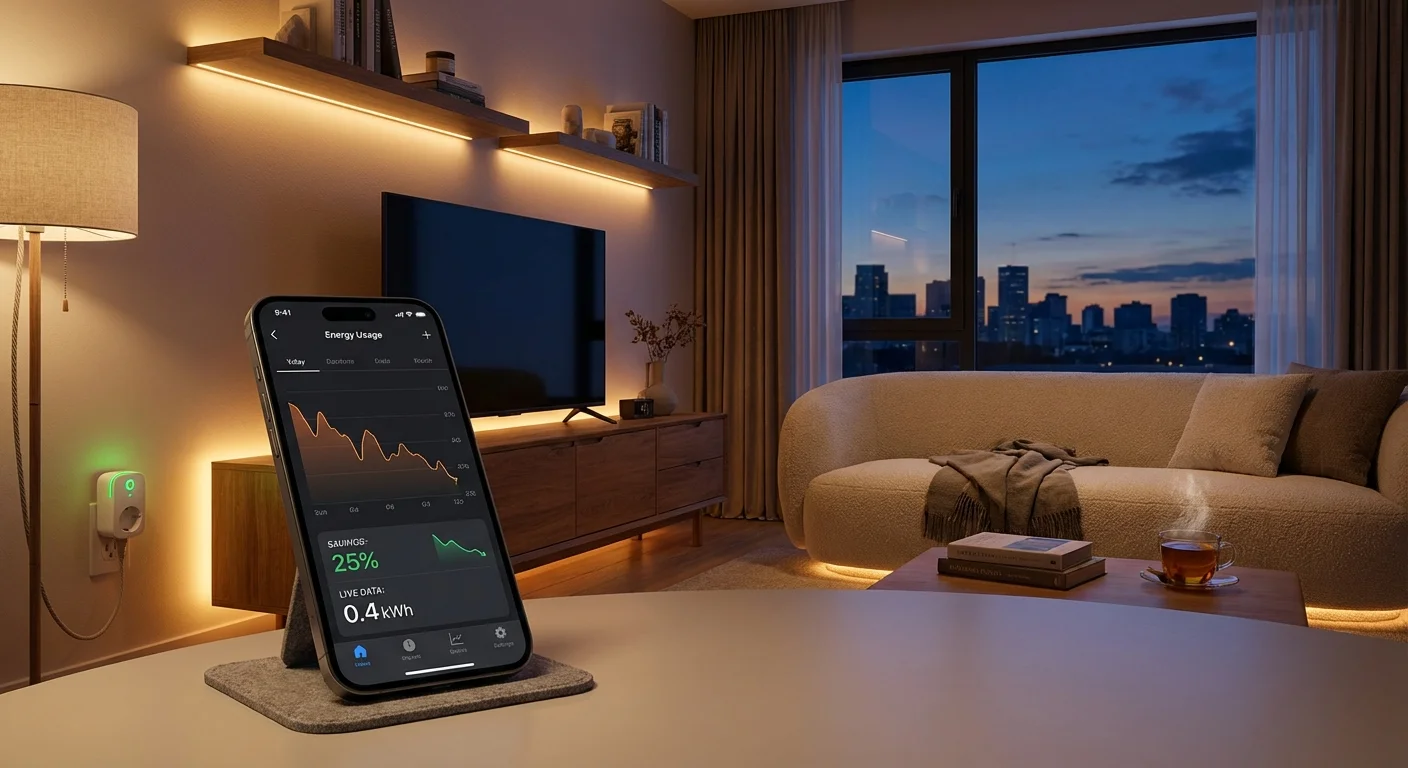
Let us start with the easiest upgrade of all: the smart plug. But we are not talking about just any standard smart plug; we are talking about smart plugs with built-in energy monitoring. These clever little devices sit between your wall outlet and your ‘dumb’ appliances, acting as a gatekeeper for your electricity.
How It Saves You Money
Many electronics in your home—like coffee makers, gaming consoles, microwaves, and older televisions—continue to draw power even when they are switched off. An energy-monitoring smart plug allows you to open an app on your smartphone and see exactly how much electricity a specific device is pulling in real-time. Once you identify the worst offenders, you can set the smart plug to completely cut off the power supply during the hours you know you won’t be using them. For instance, you can schedule your coffee maker’s plug to turn completely off from 9 AM to 6 AM the next day. No more vampire drain!
- Average Cost: $15 to $25 for a two-pack.
- Best Feature: Real-time kilowatt-hour (kWh) tracking to identify power-hungry appliances.
- The Money Math: Eliminating vampire power on just three heavy-drain appliances can save you roughly $30 to $50 a year, meaning these plugs pay for themselves in less than six months.
2. The ‘Dumb’ AC Whisperer: Smart IR Controllers
When people think of smart climate control, they immediately picture an expensive $250 Nest or Ecobee thermostat. But what if you live in an apartment, use window AC units, or rely on a mini-split system? Enter the Smart IR (Infrared) Controller—one of the best-kept secrets in the smart home world.
How It Saves You Money
Devices like the BroadLink RM4 Mini or the SwitchBot Hub Mini cost around $25 and act as a universal remote for anything that uses an infrared signal. You place this tiny puck-sized device in a room with your window AC unit or space heater, connect it to your Wi-Fi, and suddenly, your completely ‘dumb’ appliance becomes a fully automated smart device. You can set geofencing rules so that your AC unit automatically shuts off the second your smartphone leaves the house, and turns back on when you are five minutes away. You will never again leave the house for an eight-hour workday only to realize you left the AC blasting at 68 degrees.
- Average Cost: $20 to $30.
- Best Feature: Geofencing and temperature-triggered automations.
- The Money Math: Cooling and heating account for nearly half of a home’s energy use. Automating just one window unit to run 20% less frequently can shave $10 to $15 off your bill every single month during summer or winter.
3. The Phantom Power Killer: Advanced Smart Power Strips
If a smart plug is a sniper rifle for vampire power, a smart power strip is a bazooka. Think about your home entertainment center or your home office desk. You likely have a TV, a soundbar, a gaming console, a streaming box, and maybe a subwoofer all plugged into one standard power strip. Even when the TV is off, those peripherals are sitting in standby mode, eagerly sipping electricity.
How It Saves You Money
A smart power strip looks like a normal surge protector, but it features independently controllable outlets. Even better, some models feature ‘master and slave’ outlets. When the strip detects that the device plugged into the master outlet (like your TV) has been turned off, it automatically cuts power to all the slave outlets (your soundbar, DVD player, and game console). Alternatively, you can buy Wi-Fi-enabled smart strips that let you shut down an entire workstation with a single voice command to Alexa or Google Assistant. ‘Alexa, turn off the entertainment center’ suddenly translates into hard cash savings.
- Average Cost: $30 to $45.
- Best Feature: Auto-shutoff for peripheral devices based on the main device’s power state.
- The Money Math: Home entertainment systems are notorious for standby power drain. Cutting this off completely can save you $40 to $60 annually depending on your local electricity rates.
4. The Automation Magician: Smart LEDs with Motion Sensors
You probably already know that switching from incandescent bulbs to LED bulbs saves money. But swapping standard LEDs for smart LEDs takes those savings to an entirely new, automated level. However, to keep this under $50, we are bypassing the expensive Philips Hue setups and looking at budget-friendly brands like Wyze, Kasa, or Sengled, combined with cheap motion sensors.
How It Saves You Money
The biggest problem with lighting isn’t the efficiency of the bulb; it is human error. Kids leave lights on in the bathroom, basements stay illuminated for days unchecked, and porch lights burn into the afternoon. By installing smart bulbs and linking them to a $15 smart motion sensor, you guarantee that a room is only lit when someone is actually in it. You can also program smart bulbs to automatically dim to 70% brightness after 8 PM, which uses less electricity while helping your brain prepare for sleep. Furthermore, geofencing can ensure every single light in your house shuts down the moment you drive away.
- Average Cost: $10 to $15 per bulb, $15 for a motion sensor.
- Best Feature: Absolute elimination of ‘left on’ lights through motion timeouts.
- The Money Math: While individual light savings are small, eliminating 10 hours of wasted lighting across five rooms every week will shave several dollars off your monthly bill, extending the lifespan of the bulbs themselves.
Maximize Your Tech & Utility Savings!
Want to save even more? Get the digital-first HDFC Pixel Play Credit Card to earn powerful cashback on all your smart home gadget purchases and monthly utility bills.
5. The Forgotten Saver: Smart Water Leak Detectors
When we talk about energy bills, we almost exclusively focus on electricity and gas. But what about your water bill? And what about the gas or electricity required to heat that water? A running toilet or a hidden leak behind your washing machine is one of the most devastating things that can happen to your utility budget.
How It Saves You Money
For under $40, you can buy a multi-pack of smart water leak detectors (from brands like Govee or Moen). These tiny, battery-operated sensors sit on the floor near your water heater, under your sinks, and behind your toilets. The moment they detect even a drop of pooling water, they send a high-priority push notification to your phone and sound an audible alarm. A silently running toilet can waste up to 200 gallons of water a day. A leaking hot water heater wastes water AND the energy used to heat it. Catching these issues in minute one rather than day thirty will save you from a catastrophic utility bill and thousands of dollars in water damage.
- Average Cost: $35 for a three-pack.
- Best Feature: Instant push notifications to your phone from anywhere in the world.
- The Money Math: A continuous leak can spike your water bill by $100 to $300 in a single billing cycle. This $35 investment is the ultimate utility bill insurance policy.
Quick Comparison: Best Budget Smart Home Upgrades
| Upgrade | Average Cost | Setup Time | Primary Benefit |
|---|---|---|---|
| Energy-Monitoring Plugs | $15 – $25 | 5 mins | Stops vampire power draw |
| Smart IR Controllers | $20 – $30 | 10 mins | Automates window AC units |
| Smart Power Strips | $30 – $45 | 5 mins | Shuts down entertainment hubs |
| Smart Bulbs & Sensors | $25 – $40 | 15 mins | Ensures lights are never left on |
| Water Leak Detectors | $35 | 5 mins | Prevents massive water/heating waste |
Conclusion: Small Investments, Massive Long-Term Gains
You do not need to gut your house and install expensive, hardwired smart systems to make your home energy-efficient. By identifying the specific bottlenecks in your daily routine—like phantom power drain, lights left on, or inefficient window AC usage—you can deploy these sub-$50 gadgets to act as your personal energy guards. Start with just one upgrade this weekend, like throwing a smart plug on your TV setup, and watch how quickly the savings appear on your next utility bill. The technology is cheap, the setup is incredibly easy, and the financial returns are instant.
Frequently Asked Questions (FAQ)
Do smart home devices use energy themselves?
Yes, smart devices require a tiny amount of continuous power to maintain a Wi-Fi connection. However, this is usually less than 1 or 2 watts. The energy they save by turning off large appliances or lights vastly outweighs the minuscule amount of power they consume to operate.
Are smart plugs safe for high-power appliances like space heaters?
It depends entirely on the plug’s rating. Always check the amperage rating of the smart plug. Most high-quality smart plugs are rated for 15 Amps (around 1800 Watts), which is generally safe for standard space heaters. However, you should always check the wattage of your specific heater and never daisy-chain power strips.
Do I need a smart home hub to use these devices?
Not necessarily. Most modern budget smart home gadgets, like Kasa, Wyze, or Govee, connect directly to your home’s 2.4GHz Wi-Fi network and can be controlled entirely through their standalone smartphone apps. No expensive hub required!
What is geofencing and how does it lower energy bills?
Geofencing uses your smartphone’s GPS to create a virtual boundary around your home. When you and your phone cross that boundary (i.e., you drive away for work), the smart home app triggers a routine. It can automatically turn off all smart plugs, turn off window ACs via IR controllers, and shut down every smart light, ensuring absolute zero waste while the house is empty.
How long does it typically take to see savings on my bill?
You should see a noticeable difference in your very next billing cycle, assuming you have targeted high-drain areas. Eliminating the constant phantom load of a large entertainment center or reducing your AC runtime by a few hours a day creates immediate, measurable reductions in your total kilowatt-hour usage.