
 11
11
We were all promised a future that looked like something out of The Jetsons. A seamless, automated utopia where our homes anticipate our every need, coffee brews exactly as we open our eyes, and a soothing AI voice manages our entire lives. But for many of us, the reality of the modern smart home looks a lot more like standing in a dark kitchen at 2 AM, aggressively resetting a router because the ‘smart’ lightbulb refuses to connect to the Wi-Fi. The smart home industry has exploded over the last decade, and in its wake, it has spawned what tech enthusiasts jokingly call the ‘Internet of Useless Things’.
In our rush to automate everything, we’ve started adding microchips and Wi-Fi antennas to devices that simply didn’t need them. Tech companies are constantly trying to reinvent the wheel, convincing consumers that they need an app for every single appliance in their house. This has led to a market flooded with overhyped, overpriced, and quickly obsolete gadgets that complicate our lives rather than simplify them. If you want a truly seamless, genuinely useful automated home, you need to be highly selective about what you bring into your ecosystem. It is time to cut through the marketing noise. Let’s dive deep into the five most overhyped smart home devices you should absolutely stop buying, and more importantly, what you should be investing your hard-earned money in instead.
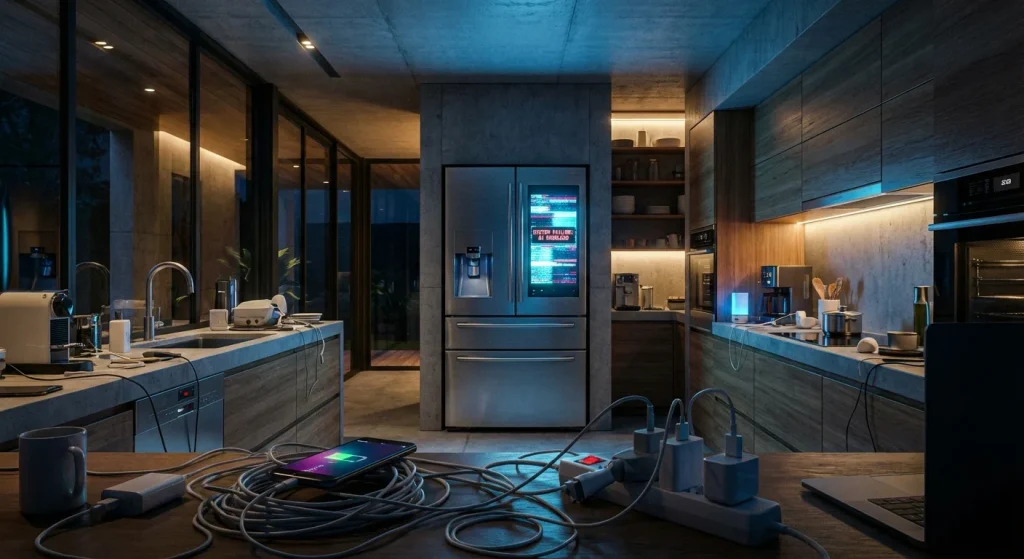
Remember when slapping a giant touch screen onto the front of a refrigerator seemed like the absolute peak of modern luxury? Today, the smart fridge is arguably the poster child for overhyped smart home technology. On paper, it sounds like a fun idea: you can check your calendar, stream a cooking video on YouTube, see what is inside without opening the door, and even order groceries straight from the appliance. But in practice, these mammoth machines are a logistical and financial nightmare.
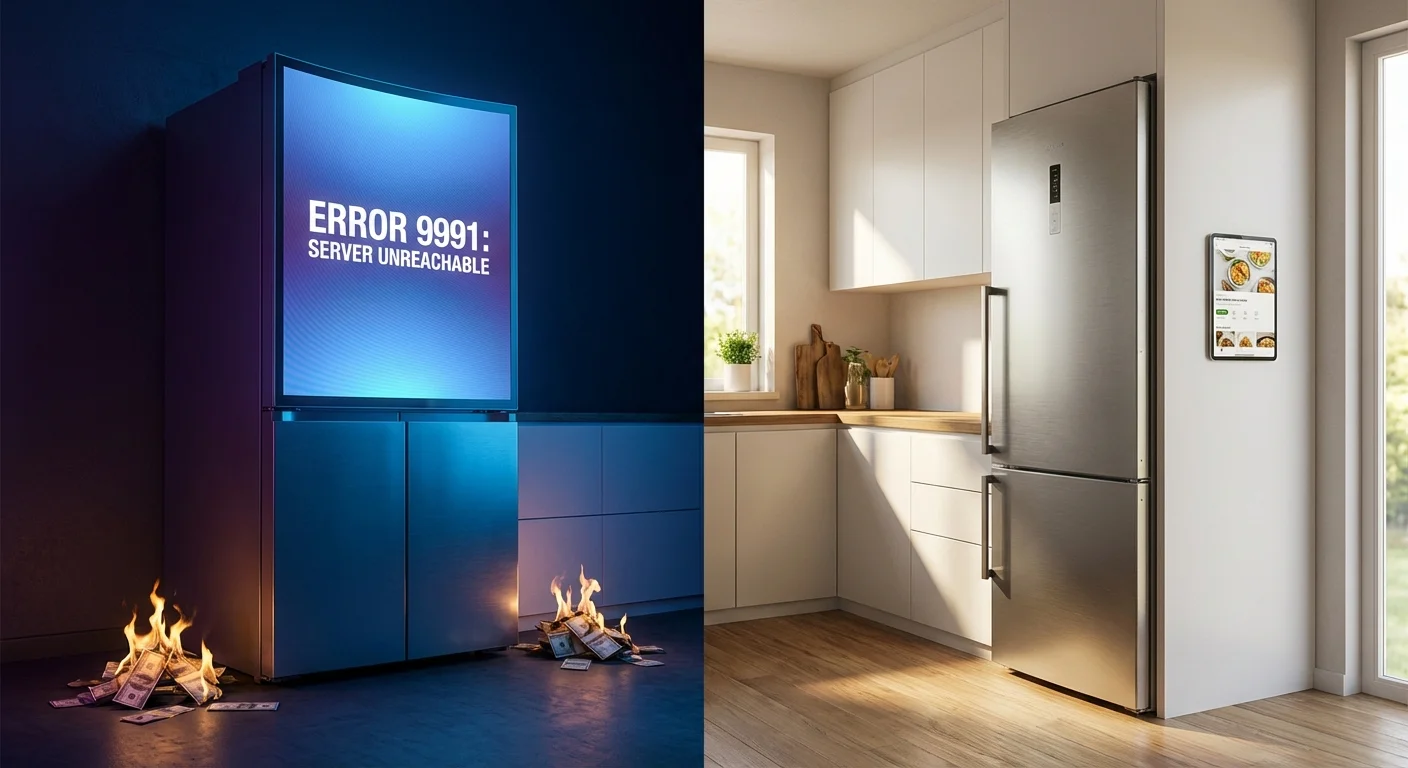
Why it is overhyped: The fundamental flaw with a smart refrigerator is the mismatch in lifespans. A high-quality refrigerator should seamlessly last you 10 to 15 years. The tablet embedded in its door, however, is essentially obsolete in three to four years. Manufacturers are notoriously bad at providing long-term software updates for these screens. Before long, the apps stop working, the interface becomes sluggish, and you are left with a very expensive, broken tablet permanently glued to your kitchen appliance. Furthermore, typing on a vertical screen while standing up is ergonomically uncomfortable, and your smartphone is already vastly superior at doing every single task the fridge screen attempts to do.
What to buy instead: Buy a high-quality, reliable, ‘dumb’ refrigerator from a reputable brand that prioritizes cooling, energy efficiency, and durable compressors. If you really want a digital dashboard in the kitchen, buy a dedicated smart display (like a Google Nest Hub or an Amazon Echo Show) or simply mount an inexpensive tablet to the wall or cabinet. When the tablet eventually gets old and slow, you can replace it for $100 instead of having to buy a whole new $3,000 refrigerator.
If you have ever browsed Amazon for smart home gear, you have undoubtedly been bombarded by multipacks of incredibly cheap Wi-Fi smart plugs from brands you have never heard of. At $15 for a four-pack, they seem like an absolute steal. You think to yourself, ‘I can automate every lamp in my house for under fifty bucks!’ But these budget devices often end up being the weakest, most frustrating link in your entire smart home setup.
Why it is overhyped: Cheap Wi-Fi plugs usually operate exclusively on the crowded 2.4GHz network and have terrible internal antennas, leading to constant dropouts and ‘Device Unreachable’ errors in your smart home app. Worse, they almost always require you to download a proprietary, poorly translated app to set them up, cluttering your phone. Security is also a massive concern; many of these ultra-budget IoT (Internet of Things) devices lack basic security protocols, potentially leaving your home network vulnerable to hacking. They also bog down your router; adding 20 cheap Wi-Fi devices to a standard ISP-provided router will grind your internet speed to a halt.
What to buy instead: Stop buying individual Wi-Fi plugs and invest in devices that use dedicated smart home protocols like Zigbee, Z-Wave, or the new universal standard, Matter over Thread. Brands like Eve, Philips Hue, and Aqara offer smart plugs that don’t clog up your Wi-Fi bandwidth. Matter-compatible plugs seamlessly integrate with Apple HomeKit, Google Assistant, and Amazon Alexa without needing third-party apps. They respond instantly, are far more secure, and actually build a mesh network that strengthens your smart home’s connection the more devices you add.
The appeal of a smart lock is obvious: no more fumbling for keys in the rain, the ability to grant temporary access to guests or dog walkers, and the peace of mind knowing your door locked automatically behind you. However, not all smart locks are created equal, and entry-level Bluetooth-only smart locks are a massive source of daily frustration.
Why it is overhyped: Bluetooth has a very limited range and is inherently slow to handshake (connect) with your device. When you walk up to your door with a Bluetooth-only lock, you often have to stand there awkwardly for 10 to 30 seconds while your phone tries to connect to the lock to trigger the auto-unlock feature. If you want to control the lock remotely (for example, letting a plumber in while you are at work), you can’t, because the lock has no direct connection to the internet without an expensive, separate plug-in bridge that constantly disconnects.
What to buy instead: Spend the extra money on a Wi-Fi-enabled smart lock with a physical keypad, or a Z-Wave/Zigbee lock if you have a dedicated smart home hub. Devices like the Schlage Encode or the Yale Assure Lock 2 with Wi-Fi connect directly to your network. The keypad is crucial: it means you are not reliant on your phone’s battery being charged to get into your house. You can just punch in your code and enter instantly. Real smart homes offer multiple ways to interface with them, and a physical keypad is the ultimate failsafe.
The push to make every single countertop appliance ‘smart’ has reached absurd levels. We now have smart toasters that cost $300, Wi-Fi-enabled coffee makers, and microwaves that you can control with Alexa. While these might make for fun party tricks, they are the definition of overhyped technology that fails to actually solve a human problem.
Why it is overhyped: Automation is supposed to save you time and physical effort. But with a smart toaster or a smart microwave, you still have to physically walk into the kitchen, open the device, place the bread or the food inside, and close the door. By the time you have done all of the physical labor required to prepare the appliance, asking Alexa to ‘start the toaster’ or pulling out your smartphone to press start saves you exactly zero seconds. In fact, it often takes longer to use the app than it does to simply push the physical button that is right in front of you. Plus, adding complex electronics to devices designed to generate extreme heat drastically reduces their lifespan.
What to buy instead: Put your money into high-end, analog, ‘dumb’ appliances. A premium Breville toaster oven, a high-quality Moccamaster coffee brewer, or a classic KitchenAid mixer will easily outlast their ‘smart’ counterparts by decades. If you desperately want your coffee maker to start automatically in the morning, buy a standard coffee maker with a physical analog switch and plug it into a high-quality smart plug. You’ll get the exact same automated morning routine for a fraction of the cost, with none of the software obsolescence.
Robot vacuums are genuinely one of the best smart home innovations of the 21st century. Having a little droid keep your floors perpetually clean feels like living in the future. However, if you try to save money by buying a cheap, entry-level robot vacuum, you are going to be deeply disappointed.
Why it is overhyped: Cheap robot vacuums don’t have smart mapping technology. Instead, they rely on a basic ‘bump and turn’ algorithm. They drive in a straight line until they smash into your baseboards, turn a random number of degrees, and blindly drive off again. They don’t know where they are, they don’t know where they’ve been, and they certainly don’t know where their charging dock is. These vacuums constantly get stuck under couches, tangle themselves in phone chargers, smear pet messes across the floor, and ultimately require you to ‘babysit’ them. If you have to clean up the house just so your robot vacuum can run without getting stuck, it isn’t a smart device—it’s a chore.
What to buy instead: You must invest in a robot vacuum equipped with LiDAR (Light Detection and Ranging) or advanced camera-based mapping. Brands like Roborock, high-end Roombas, and Ecovacs Deebots use lasers to map your entire house with millimeter precision in real-time. You can draw virtual ‘no-go zones’ on your phone to keep them away from cables, tell them to only clean the kitchen after dinner, and trust that they will actually find their way back to the charger without your intervention. A LiDAR vacuum is a true set-it-and-forget-it smart home device.
Tired of smart home tech that doesn’t actually make you smarter? Upgrade your personal productivity with the Ultimate Dreamteam Bot Bundle—featuring 100+ AI assistants designed to automate your digital workflow.
To help you navigate your next tech purchase, here is a quick cheat sheet on what to avoid and what actually provides value:
| Overhyped Device | The Core Problem | The Smart Alternative |
|---|---|---|
| Smart Refrigerators | Screens become obsolete in 3 years while the fridge lasts 15 years. | A durable dumb fridge + a mounted iPad or Nest Hub. |
| Cheap Wi-Fi Plugs | Network crowding, security flaws, and app clutter. | Matter/Thread or Zigbee plugs (Eve, Philips Hue). |
| Bluetooth-Only Locks | Terrible connection latency and no remote access out-of-the-box. | Wi-Fi or Z-Wave locks with a physical keypad. |
| Smart Toasters/Microwaves | Zero time saved since manual physical input (adding food) is still required. | High-end analog appliances built to last decades. |
| Bump-and-Turn Robot Vacs | Gets stuck constantly, damages baseboards, unpredictable cleaning. | LiDAR-equipped mapping vacuums (Roborock, Deebot). |
Building a genuinely helpful smart home isn’t about buying every Wi-Fi-enabled gadget you see on sale. It is about identifying friction points in your daily routine and using technology to silently and reliably remove them. Gimmicks like smart screens on refrigerators or app-controlled toasters create more friction than they solve. By focusing on robust networking standards like Matter, investing in high-quality automations like LiDAR vacuums, and keeping your core appliances delightfully ‘dumb’, you can build a smart home that truly feels like the future—no router reboots required.
Matter is a relatively new, universal smart home connectivity standard developed collaboratively by Apple, Google, Amazon, and Samsung. Devices that carry the Matter logo can communicate with each other locally and seamlessly, regardless of which voice assistant or app you use. It eliminates the need for downloading a dozen different manufacturer apps and makes smart home gear vastly more reliable and secure.
While many Wi-Fi devices connect directly to your router, relying solely on Wi-Fi is a recipe for a sluggish network. Having a dedicated hub (like an Apple TV 4K, a SmartThings hub, or an Amazon Echo) that supports Thread, Zigbee, or Z-Wave offloads the heavy lifting from your Wi-Fi router. It creates a local, fast, and highly reliable mesh network for your devices, meaning your automations will work even if your internet goes down.
They certainly can be, especially if you buy unbranded, ultra-cheap devices that don’t receive firmware updates. Hackers can use vulnerable IoT devices as a backdoor into your home network. To protect yourself, only buy from reputable brands, always change default passwords, put your smart home devices on a separate guest Wi-Fi network if possible, and embrace devices that offer local processing rather than relying strictly on cloud servers.
Generally, no. Major appliances like ovens, washing machines, and dishwashers have primary functions that require manual human interaction (loading the dishes, pouring the detergent). The ‘smart’ features often just send a notification to your phone when a cycle is done. Unless your current appliance is completely broken, the high cost of upgrading to a smart version provides a very poor return on investment in terms of actual convenience.