When most of us think about smart home technology, we envision convenience, futuristic aesthetics, and, let us be honest, a hefty credit card bill. From voice assistants and smart thermostats to automated locks and Wi-Fi security cameras, building a fully connected ecosystem is rarely cheap. For years, I viewed my smart home setup purely as an expense—a luxury that saved me time but steadily drained my wallet through electricity costs and hardware upgrades. But everything changed when I asked myself a simple question: What are these incredibly powerful, always-on devices doing during the 90 percent of the day when I am not actively using them?
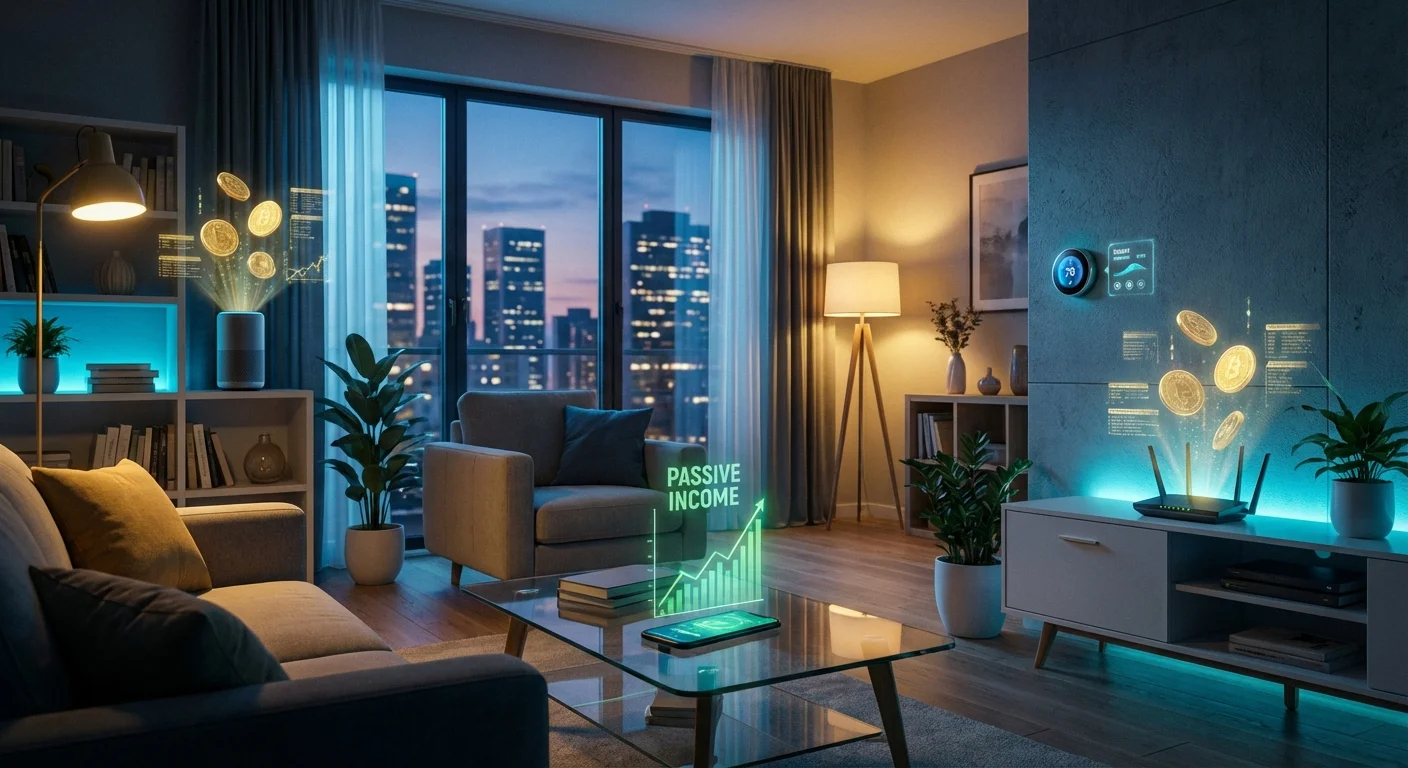
The answer was frustrating: Absolutely nothing. They were sitting idle, consuming standby power, and waiting for a command. That is when I stumbled down the rabbit hole of IoT (Internet of Things) monetization. I realized that the computing power, internet connectivity, and environmental control capabilities of my home could be leveraged to generate passive income. Fast forward to today, and my smart home is no longer a liability; it is a revenue-generating asset that pays for its own electricity and upgrades. In this comprehensive guide, I am going to walk you through three highly unconventional but proven ways your smart home devices can actually pay for themselves.
Method 1: Monetizing Idle Internet Bandwidth and Computing Power
Your smart home requires a robust internet connection to function. To support multiple devices without lag, you likely pay for a high-speed broadband or fiber optic plan. However, even if you are streaming 4K video, playing online games, and running twenty smart plugs simultaneously, you are probably utilizing a mere fraction of your total bandwidth capacity. Enter the world of decentralized networks and bandwidth sharing.
The Rise of DePINs (Decentralized Physical Infrastructure Networks)
One of the fastest-growing trends in the tech world is DePIN. These are networks that rely on everyday users to provide physical infrastructure—like computing power, sensors, or internet bandwidth—in exchange for financial rewards. Instead of giant corporations building massive data centers, they crowd-source the resources from people like you and me. If you have an always-on smart home hub, a Raspberry Pi, or even a spare smartphone plugged in, you can participate.
Applications like Honeygain, EarnApp, and Mysterium Network allow you to lease out your unused internet bandwidth. These services act as residential proxy networks. Data scientists, marketing agencies, and researchers use this network to verify localized search results, perform web scraping, and bypass geo-blocks. The best part? You do not have to do anything actively. You install the software on an always-on device—like an old PC you use as a Plex server, or an Android-based smart TV box—and let it run in the background. My personal setup involves a dedicated Raspberry Pi that also runs my Home Assistant server. Because the Pi is on 24/7 anyway, running a bandwidth-sharing node costs me exactly zero extra dollars in electricity, while bringing in enough passive cash each month to cover my Netflix and Spotify subscriptions.
Addressing Security and Privacy Concerns
The immediate question everyone asks is: Is this safe? Giving strangers access to your IP address sounds terrifying. However, reputable bandwidth-sharing apps employ strict encryption and vetting processes. They only share the bandwidth, not your personal data, screen, or files. The traffic routes through an encrypted tunnel. To be extra cautious, I recommend setting up a Guest Network or a separate VLAN on your smart router specifically for these devices. This ensures that even if the proxy network is compromised, the rest of your personal smart home data (like your security cameras and smart locks) remains completely isolated and secure.
Method 2: Smart Energy Arbitrage and Demand Response Rewards
Smart thermostats (like Nest or Ecobee) and smart plugs are usually marketed as tools to save money on your energy bill by turning things off when you are not home. But saving money is not the same as making money. What if I told you that your local utility company might actually pay you cold, hard cash to use less electricity at specific times?
How Demand Response Programs Work
The electrical grid operates on a delicate balance of supply and demand. During extreme weather events—like a scorching summer afternoon when everyone turns on their air conditioning—the grid strains under the pressure. To prevent blackouts, utility companies have to fire up peaker plants, which are incredibly expensive and terrible for the environment. Instead of paying millions to turn on a peaker plant, utility companies have realized it is cheaper to pay consumers to temporarily reduce their usage. This is called a Demand Response program.
By connecting your smart thermostat to third-party services like OhmConnect, GridRewards, or your direct utility provider’s smart savings program, you can automate this entire process. Here is how my setup works: When the grid predicts a spike in demand (usually between 4 PM and 7 PM), my smart thermostat receives a signal. Before the peak hour hits, the thermostat pre-cools my house by dropping the temperature a few degrees while energy is cheap and abundant. Then, right as the peak hour begins, the thermostat automatically raises the temperature slightly, dramatically reducing energy consumption.
Maximizing Returns with Smart Plugs
But you do not have to stop at just the thermostat. I have heavy-draw appliances, like my secondary basement freezer and my dehumidifier, connected to heavy-duty smart plugs. Using Home Assistant automations, these plugs automatically switch off during an OhmHour (peak demand event) and turn back on the moment the event ends. Because modern freezers can easily maintain their temperature for a few hours without power, there is zero risk to my food. For doing absolutely nothing except letting my smart devices manage themselves, I receive a monthly payout via PayPal. Over the course of a hot summer, these automated energy reductions can easily yield hundreds of dollars, transforming my smart thermostat from a cool gadget into a serious financial asset.
Turn Your Tech Hobby Into a Wealth-Building Machine
If you want to discover more strategies to build multiple streams of digital passive income, The 90 Day Wealth Matrix offers a comprehensive blueprint.
Method 3: Automated Micro-Real Estate and Storage Leasing
The final, and most lucrative, unconventional way to monetize your smart home is by leveraging your security devices to facilitate hands-free micro-real estate rentals. We have all heard of Airbnb, but renting out a bedroom requires cleaning, interacting with guests, and constant upkeep. What if you could rent out your empty garage, driveway, or backyard without ever having to speak to another human being?
The Power of Smart Locks and Automated Access
Thanks to the sharing economy, platforms like Neighbor (for storage/parking) and Sniffspot (for renting out backyards to dog owners) have exploded in popularity. The biggest hurdle for most people trying to do this is logistics. How do you let someone into your garage to store their boxes without giving them the physical key to your house? The answer lies in your smart security ecosystem.
I have an attached garage that I barely use. I listed the space on Neighbor as a premium, climate-controlled storage unit. To automate the process, I installed a smart keypad deadbolt on the exterior side door of the garage, and a smart security camera facing the interior. When a renter books the space, my smart lock system automatically generates a unique, temporary PIN code that only works during their specified rental period. The moment they unlock the door, the smart camera begins recording and sends a notification to my phone, ensuring I know exactly who is in the space and what they are storing.
Creating a Hands-Free Passive Income Stream
This setup creates a completely frictionless experience. The renter gets the convenience of accessing their belongings whenever they need, and I get the peace of mind knowing the rest of my house is securely locked and monitored. The smart lock logs every entry and exit, providing a clear digital audit trail. By utilizing smart padlocks, Wi-Fi cameras, and automated access codes, you can monetize sheds, driveways, RV parking pads, and empty closets. This single method generates enough revenue for me to completely offset my mortgage’s property tax, proving that smart home technology can drastically elevate your property’s earning potential.
Summary of Monetization Methods
To help you visualize the potential of your smart home, here is a breakdown of the three methods we have discussed, comparing the required setup, effort, and monthly earning potential.
| Monetization Method | Required Devices | Ongoing Effort | Est. Monthly Earnings |
|---|---|---|---|
| Bandwidth Sharing (DePIN) | Always-on PC, Pi, or Hub | Virtually None | $10 – $40 |
| Energy Arbitrage | Smart Thermostat, Smart Plugs | Low (Automated) | $20 – $100 (Seasonal) |
| Micro-Space Leasing | Smart Locks, Wi-Fi Cameras | Medium (Initial Setup) | $50 – $300+ |
Frequently Asked Questions (FAQ)
Will sharing my bandwidth slow down my internet?
In most cases, you will not even notice it. Bandwidth-sharing applications typically only consume a fraction of your upload speed (usually less than 10%). They are designed to run quietly in the background without interrupting high-bandwidth activities like gaming or video streaming. Furthermore, most apps allow you to set usage caps to ensure they never exceed your ISP data limits.
Are demand response programs available everywhere?
No, demand response programs depend largely on your local utility provider and regional energy grid. They are most common in areas that experience extreme temperature fluctuations and high grid strain, such as California, Texas, and parts of the Northeast US. Check with your local energy provider or sign up for a service like OhmConnect to see if your zip code is eligible.
Is it legal to rent out my garage or driveway?
Generally, yes, micro-leasing platforms like Neighbor are legal in most jurisdictions. However, you should always check your local zoning laws, HOA (Homeowners Association) guidelines, and your homeowner’s insurance policy. The platforms themselves often provide secondary insurance policies to protect hosts against property damage or liability claims.
Do I need an expensive smart home hub to do this?
Not necessarily. While a dedicated hub like Hubitat or a server running Home Assistant gives you the ultimate control and automation capabilities, many of these methods can be executed with basic, entry-level devices. A simple $20 Wi-Fi smart plug and a standalone smart thermostat connected directly to your home router are more than enough to get started with energy arbitrage, for example.
Will my smart home devices be vulnerable to hackers if I rent out space?
When executing micro-space leasing, security is paramount. Always use reputable smart lock and camera brands that offer two-factor authentication (2FA). Never share your master access code; always generate temporary, time-restricted PIN codes for renters. Additionally, putting your security devices on a separate guest Wi-Fi network provides an extra layer of defense against potential bad actors.