
The Silicon Valley Paradox: Selling the Addiction, Escaping the Trap
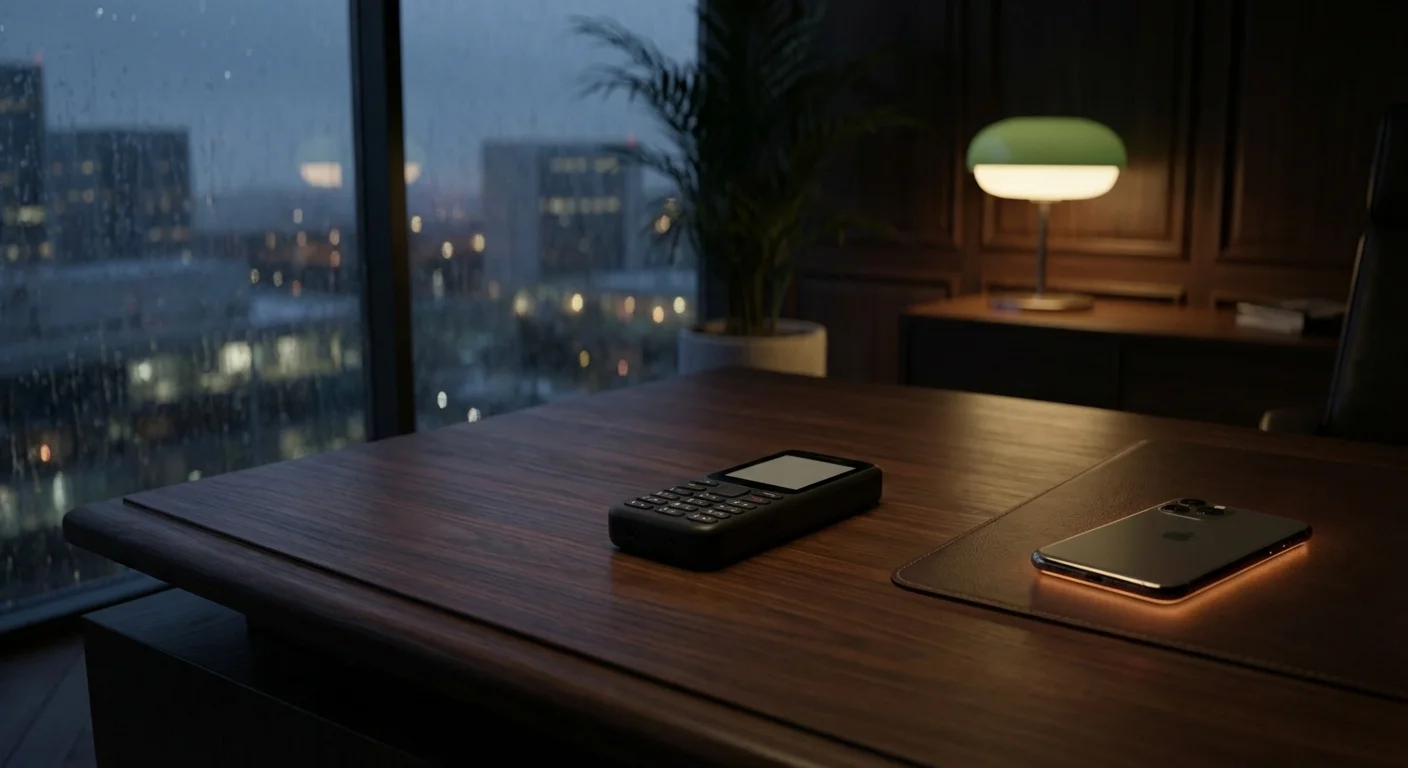
Imagine sitting in a high-end, artisanal coffee shop in the heart of Palo Alto. To your left, a venture capitalist who just closed a $50 million AI funding round pulls something out of his pocket. It isn’t the latest titanium iPhone 15 Pro Max. It isn’t a folding Samsung galaxy. It’s a $29 plastic Nokia flip phone. Welcome to the great tech rebellion of 2024.
For years, the architects of our digital world have operated under a silent, hypocritical code: Don’t get high on your own supply. Steve Jobs notoriously limited his children’s access to the iPad. Bill Gates banned cell phones at the dinner table. But in 2024, this philosophy has evolved from merely protecting children to a full-blown lifestyle overhaul for the tech elite. Tech millionaires are systematically abandoning their smartphones in favor of minimalist, stripped-down ‘dumb phones’—and the reasons behind this shift reveal a dark truth about our hyper-connected reality.
Why Being Disconnected is the Ultimate Status Symbol
In the 1990s and early 2000s, being reachable was a sign of importance. Carrying a BlackBerry meant you were a high-powered executive whose decisions moved markets. Fast forward to 2024, and the paradigm has entirely flipped. In a world where every delivery driver, middle manager, and teenager is hyper-reachable, being unreachable has become the ultimate flex.
This shift is birthing the concept of the ‘Time Billionaire.’ Tech elites are realizing that their most valuable, non-renewable asset isn’t capital—it’s unbroken, uninterrupted attention. A smartphone is fundamentally designed to fracture attention. By carrying a dumb phone, these millionaires are signaling a powerful message: My time is too valuable to be hijacked by algorithms, push notifications, and urgent but unimportant emails.
The Neuroscience of the Dumb Phone Switch
The transition away from iPhones isn’t just a philosophical choice; it is deeply rooted in neuroscience. The modern smartphone is essentially a digital slot machine. Every time you unlock your screen, swipe to refresh Twitter, or check your email, your brain receives a micro-dose of dopamine.
Over time, this creates ‘dopamine exhaustion.’ The baseline level of stimulation required to feel normal skyrockets, making deep, focused work—the kind of work that actually builds billion-dollar companies—feel painstakingly boring and difficult. By switching to a device that can only make calls and send basic text messages, tech executives force their brains to undergo a dopamine detox. The initial withdrawal is brutal, characterized by phantom vibrations and an overwhelming urge to check a screen that isn’t there. But after the 14-day mark, something magical happens. Brain fog lifts. Attention spans expand. The capacity for deep work returns.
Unlock Your True Cognitive Potential
Ready to reclaim your focus and boost your creativity after ditching your smartphone? Discover the audio track that activates your brain’s genius state.
The Arsenal of the Disconnected: Top Dumb Phones of 2024
If you’re thinking of making the switch, you don’t necessarily have to resort to a clunky device from 2003. A whole new industry of premium, minimalist feature phones has sprung up to cater to this exact demographic. Here is a breakdown of the devices currently dominating the pockets of Silicon Valley.
| Device Name | Key Features | Best For | Price Tag |
|---|---|---|---|
| The Light Phone II | E-ink display, calls, texts, alarms, hotspot. No social media. | Minimalists who want an elegant, distraction-free aesthetic. | $299 |
| Punkt MP02 | Physical keypad, 4G LTE, Signal integration for secure messaging. | Privacy-conscious executives who need encrypted texts. | $379 |
| Nokia 2720 Flip | Classic flip design, WhatsApp & Google Maps (basic), long battery. | Those who want nostalgia but need basic modern logistics. | $80 |
| Wisephone by Techless | Looks like a smartphone but acts like a dumb phone. Custom OS. | People who like the glass-slab feel but hate the apps. | $399 |
The 2024 AI Exhaustion Factor
You might wonder: Why is this happening specifically in 2024? The answer lies in the explosion of Artificial Intelligence. Since late 2022, AI integration has infiltrated every app on our phones. Algorithms are no longer just guessing what we want to see; generative AI is creating personalized, hyper-addictive content in real-time. Smartphones have become too ‘smart.’ They are overwhelming our cognitive limits.
Tech leaders who deeply understand the power of these AI agents are the ones running the fastest in the opposite direction. They know that trying to use sheer willpower to resist an AI designed by thousands of the world’s smartest engineers is a losing battle. The only winning move is not to play. Hence, the dumb phone.
How the Elite Manage the ‘Two-Device Strategy’
A common misconception is that these millionaires are abandoning digital life entirely. They aren’t living in the woods; they are running international conglomerates. So, how do they manage the logistics of modern life—banking, ride-sharing, boarding passes—without a smartphone?
They utilize the Two-Device Strategy.
- Device 1: The Dumb Phone. This stays in their pocket. It is used for immediate, necessary communication. Spouses, children, and top-tier business partners have this number.
- Device 2: The Command Center (iPad or Laptop). This stays in the bag or on the desk. All email, Slack, WhatsApp, and logistical apps live here.
The brilliance of this strategy lies in friction. By moving the addictive apps to a device that is slightly harder to access (requiring you to sit down and open a laptop or tablet), you eliminate the subconscious ‘twitch’ of pulling a phone out of your pocket while waiting in an elevator or standing in line at a grocery store.
The Bottom Line: Reclaiming Your Humanity
The dumb phone trend of 2024 is more than just a quirky tech fad; it is a profound commentary on the state of human connection and productivity. As tech millionaires abandon the very devices that built their fortunes, they are laying down a blueprint for the rest of us. You do not need to be a billionaire to protect your attention. You simply need the courage to be temporarily bored, the willingness to be slightly less reachable, and the desire to reclaim your most precious asset: your mind.
Frequently Asked Questions (FAQ)
1. Can I still use WhatsApp on a dumb phone?
It depends on the device. Pure minimalist phones like the Light Phone II do not support WhatsApp. However, ‘smart feature phones’ like the Nokia 2720 Flip or the Punkt MP02 (via Pigeon/Signal) do offer secure or essential messaging apps while still blocking infinite-scroll social media platforms.
2. How do you navigate without Google Maps?
Many dumb phone users plan their routes before leaving the house, just like in the pre-smartphone era. Alternatively, they use standalone GPS units for their cars. Some premium dumb phones are starting to include minimalist, text-based navigation features to help in a pinch without showing distracting maps and local ads.
3. What about listening to music or podcasts?
Most feature phones allow you to load MP3 files directly onto the device. Devices like the Light Phone II have a dedicated podcast tool that downloads your favorite shows over Wi-Fi. Many people making the switch also rediscover the joy of standalone MP3 players, iPods, or simply driving in silence.
4. Isn’t a dumb phone dangerous in an emergency?
Actually, dumb phones are incredibly reliable in emergencies. They connect to the exact same cell towers as smartphones (4G/LTE), and their batteries can last for days or even weeks on a single charge. If your car breaks down, your dumb phone is far more likely to have battery life than a smartphone that has been draining its battery on background apps all day.
5. Will this hurt my professional career?
Ironically, it often improves it. While you may be slower to respond to a non-urgent Slack message, the dramatic increase in your ability to focus, solve complex problems, and produce ‘deep work’ will make your actual output much higher quality. For the logistics, simply communicate to your team that you check emails at designated times during the day from your computer.