
The ‘Dopamine Menu’ Trend: How to Reset Your Brain and Reclaim 4 Hours of Free Time Daily
The Silent Time Thief: Why You Are Losing 4 Hours a Day
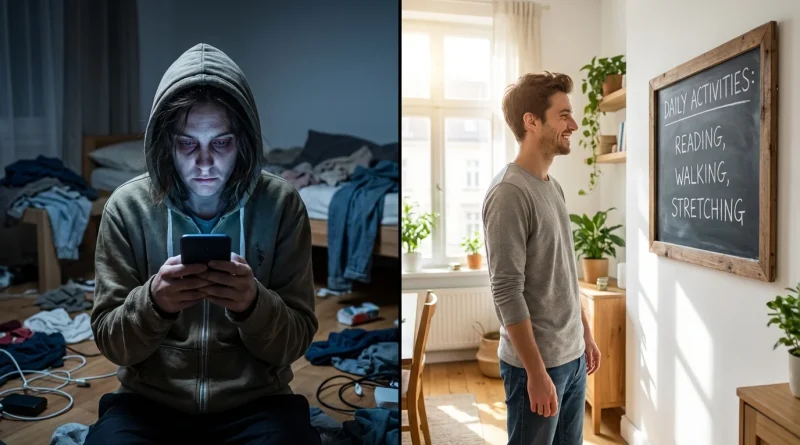
It happens to the absolute best of us. You sit down on the edge of your bed after a long, exhausting day of work. You pull out your smartphone, intending to quickly check a single message, reply to an email, or look up a recipe for dinner. Suddenly, you blink, the room has gone completely dark, and it is three hours later. You have fallen victim to the scroll hole. You feel drained, slightly anxious, thoroughly unfulfilled, and bewildered by where the precious time went. This phenomenon is not an accident; it is the direct result of billions of dollars spent by technology companies engineering algorithms specifically designed to hack your brain’s delicate dopamine pathways.
If you check your smartphone’s screen time statistics right now, you might be horrified to discover you are averaging between four to six hours of phone usage a day. That is a part-time job’s worth of hours completely vanishing into the digital ether. But what if you could take that time back? What if you could flip the script on your brain chemistry and consciously direct your energy toward activities that actually recharge you? Enter the ‘Dopamine Menu,’ a viral psychological trend that is helping thousands of people reset their brains, defeat chronic doomscrolling, and miraculously reclaim up to four hours of free time every single day.
What Exactly is a Dopamine Menu?
The concept of the Dopamine Menu originated within the ADHD (Attention Deficit Hyperactivity Disorder) community, largely popularized by creator Jessica McCabe. Individuals with ADHD often struggle with dopamine regulation, leading to intense bouts of executive dysfunction or ‘couch paralysis.’ When the brain is starved for dopamine, it naturally seeks out the path of least resistance to get a quick hit. In the modern world, that path of least resistance is almost always a smartphone, social media feed, or junk food.
However, the broader public quickly realized that this is no longer just an ADHD problem; it is a modern human problem. A Dopamine Menu is exactly what it sounds like: a personalized, physical list of stimulating, joyful, and engaging activities categorized just like a restaurant menu. Instead of relying on your exhausted, decision-fatigued brain to come up with a healthy activity in the heat of the moment, you simply look at your pre-written menu and order an activity. This removes the massive barrier of ‘friction’ that usually leads us straight back to mindless scrolling.
The Neuroscience: Why We Choose Cheap Dopamine
To truly understand why the Dopamine Menu is so devastatingly effective, we must first dispel a major myth about dopamine itself. Most people believe dopamine is the ‘pleasure’ chemical. It is not. Neuroscientists classify dopamine as the ‘pursuit’ or ‘motivation’ chemical. It is the neurotransmitter that makes us desire things, driving us to take action to achieve a reward. When you get a notification ping, your brain releases a spike of dopamine, urging you to check your phone to see the reward.
The problem lies in the difference between ‘cheap’ dopamine and ‘expensive’ (or slow) dopamine. Cheap dopamine requires zero effort. Scrolling through short-form videos, eating highly processed sugary foods, or refreshing a news feed gives your brain a rapid, unearned spike of dopamine. However, these spikes are incredibly brief and are immediately followed by a crash, leaving you feeling worse than before and craving more. This is the doomscrolling loop.
Expensive dopamine, on the other hand, comes from activities that require initial effort but yield lasting fulfillment. Reading a book, going for a brisk walk, engaging in a deep conversation, or cooking a meal requires a higher activation energy. Your brain naturally avoids these when it is tired. The Dopamine Menu acts as a bridge, lowering the activation energy required to engage in high-quality, slow-dopamine activities by eliminating the burden of choice.
How to Build Your Personal Dopamine Menu
Creating your Dopamine Menu requires self-reflection. What actually makes you feel good? What leaves you feeling energized rather than depleted? Your menu should be divided into four distinct categories, mimicking a traditional dining experience. Here is how to structure it.
1. Appetizers (Quick 5 to 10 Minute Boosts)
Appetizers are your quick fixes. These are the activities you can ‘order’ when you only have a few minutes of downtime—like waiting for water to boil, or sitting in a waiting room. Normally, this is prime scrolling time. Appetizer activities must be highly accessible and require almost zero setup.
- Doing a 5-minute stretching routine on the living room rug.
- Stepping outside to feel the sun on your face and taking ten deep breaths.
- Playing a single fast-paced song and dancing in your kitchen.
- Sending a quick, thoughtful text message to a friend or family member.
- Drinking a large, cold glass of water.
2. Mains (Deep, Engaging 1 to 2 Hour Activities)
The main courses are the meat and potatoes of your free time. These are the deep, restorative activities that you actually want to spend your reclaimed four hours doing. These require time, focus, and a bit of setup, but they leave you feeling deeply satisfied and genuinely recharged.
- Reading a chapter of a physical fiction or non-fiction book.
- Working on a creative hobby, such as painting, knitting, or woodworking.
- Going to the gym, doing a yoga class, or going for a long nature hike.
- Cooking a completely new recipe from scratch.
- Having an uninterrupted, screen-free dinner with your partner or family.
3. Sides (Pairings for Mundane Tasks)
Sides are meant to be paired with other things. We all have chores we despise—folding laundry, doing the dishes, commuting, or cleaning the bathroom. These tasks are notoriously low in dopamine, making us procrastinate. Sides are enjoyable things you add to these chores to make them highly stimulating.
- Listening to a fascinating true-crime or comedy podcast.
- Putting on a nostalgia-heavy playlist from your high school years.
- Calling a chatty friend on speakerphone.
- Listening to an immersive fantasy audiobook.
4. Desserts (Indulgences with Portion Control)
A good diet includes dessert, and a good Dopamine Menu includes indulgences. Desserts are your cheap dopamine activities. The goal of this trend is not to completely eliminate social media, video games, or reality television. The goal is intentionality. Desserts are meant to be enjoyed mindfully, in controlled portions, rather than consumed mindlessly until you feel sick.
- Scrolling TikTok or Instagram (strictly limited by a 20-minute timer).
- Watching one or two episodes of a trashy reality TV show.
- Playing a video game for a set duration.
- Eating a sweet treat without looking at a screen simultaneously.
Example Dopamine Menu
Here is a visual breakdown of how your physical menu might look when you put it all together. Feel free to copy this structure and fill it with your own personal joys.
| Category | Time Required | Examples of Activities | Energy Level Required |
|---|---|---|---|
| Appetizers | 5-15 Mins | Stretching, petting a dog, making tea, doodling | Low |
| Mains | 1-3 Hours | Reading, hiking, gardening, deep conversation, painting | High |
| Sides | Variable | Podcasts, audiobooks, upbeat playlists, calling a friend | Low |
| Desserts | 20-30 Mins | Social media, video games, Netflix, eating a sweet treat | Low (Requires Time Limits) |
The 4-Hour Math: How You Actually Get the Time Back
You might be wondering, ‘How does writing a list magically give me four hours of free time?’ The math is surprisingly simple and startlingly profound. When you lack a plan, your default behavior is screen time. The average person picks up their phone over nearly 100 times a day. If 15 of those pickups result in a 15-minute scrolling session, you have just lost nearly four hours.
By placing your physical Dopamine Menu in high-risk areas—like on your nightstand, on your coffee table, or taped to the refrigerator—you interrupt the automatic scrolling habit. When you reach for your phone out of exhaustion, the menu catches your eye. Instead of a 45-minute TikTok binge, you choose a 10-minute ‘Appetizer’ like reading an article or stretching. You have just saved 35 minutes. Compound these micro-decisions throughout the day, and you effortlessly reclaim hours of your life that were previously stolen by the algorithm.
Step-by-Step Implementation Guide
Ready to reclaim your brain? Follow these steps to successfully implement the trend into your daily routine:
Step 1: The Brain Dump. Sit down with a blank piece of paper and write down everything you enjoy doing. Do not filter yourself. From ‘taking a hot shower’ to ‘building complex Lego sets,’ get it all out of your head.
Step 2: Categorize. Group your list into the Appetizers, Mains, Sides, and Desserts categories based on the time and energy they require.
Step 3: Make It Physical and Beautiful. Do not put your Dopamine Menu on your phone. If you have to unlock your phone to see the menu, you have already lost the battle. Write it on a nice piece of cardstock, use colored markers, or print it out and frame it. Make it aesthetically pleasing.
Step 4: Audit Your Environment. If ‘reading’ is a Main on your menu, the book needs to be visible on your coffee table. If ‘painting’ is there, leave your brushes out. Lower the friction for your healthy habits while increasing the friction for your bad ones (like putting a time limit lock on social apps).
The Transition Phase: Embracing the Boredom
It is crucial to understand that for the first few days of using your Dopamine Menu, your brain will throw a temper tantrum. You have been feeding it a steady diet of hyper-palatable digital junk food for years. When you offer it the ‘broccoli’ of reading a book, it will initially resist. You will feel restless, irritable, and bored. This is a normal neurochemical withdrawal period.
Lean into the boredom. Boredom is not the enemy; it is the fertile soil where creativity and genuine motivation grow. If you can push through the initial discomfort, your dopamine baseline will begin to reset. Suddenly, a walk in the park will feel incredibly stimulating. A conversation with a friend will feel vibrant. You will transition from being a passive consumer of algorithmic content to an active creator of your own joy.
Frequently Asked Questions
Is scrolling on my phone completely bad?
Absolutely not. The Dopamine Menu philosophy is about intentionality, not strict prohibition. Social media and digital entertainment are placed in the ‘Dessert’ category. The issue is not the scrolling itself; it is the mindless, uncontrollable nature of it. Enjoy your digital desserts, but do so with boundaries, like setting a physical timer before you open the app.
What if I am too exhausted to do any of my ‘Mains’?
This is exactly why the ‘Appetizers’ category exists. On days when your executive function is completely depleted and a ‘Main’ like going to the gym feels impossible, do not force it. Choose a low-friction Appetizer, like drinking a glass of cold water or listening to a single uplifting song. Often, completing one tiny positive action provides just enough momentum to tackle a slightly bigger one.
How often should I update my Dopamine Menu?
Your menu should be a living document. Just like a real restaurant changes its menu based on the seasons, you should update yours every few months. If you notice you are consistently ignoring a specific activity on your list, it might be time to take it off and replace it with a new hobby or interest to keep things fresh and exciting for your brain.
Can I use this for my children?
Yes, incredibly effectively! Parents are finding massive success by creating a visual Dopamine Menu for their kids. When a child complains that they are ‘bored’ and demands an iPad, parents can direct them to the family menu, which lists activities like building a fort, playing with Play-Doh, or reading a comic book. It teaches children early emotional regulation and how to entertain themselves without screens.
What if I fail and spend three hours doomscrolling anyway?
Give yourself grace. You are fighting against some of the most sophisticated behavioral engineering on the planet. If you fall into a scroll hole, do not use it as an excuse to abandon the menu entirely. Recognize it happened, forgive yourself, and resolve to choose a small ‘Appetizer’ the next time you feel the urge to check your phone. Consistency, not perfection, is the key to resetting your brain.