
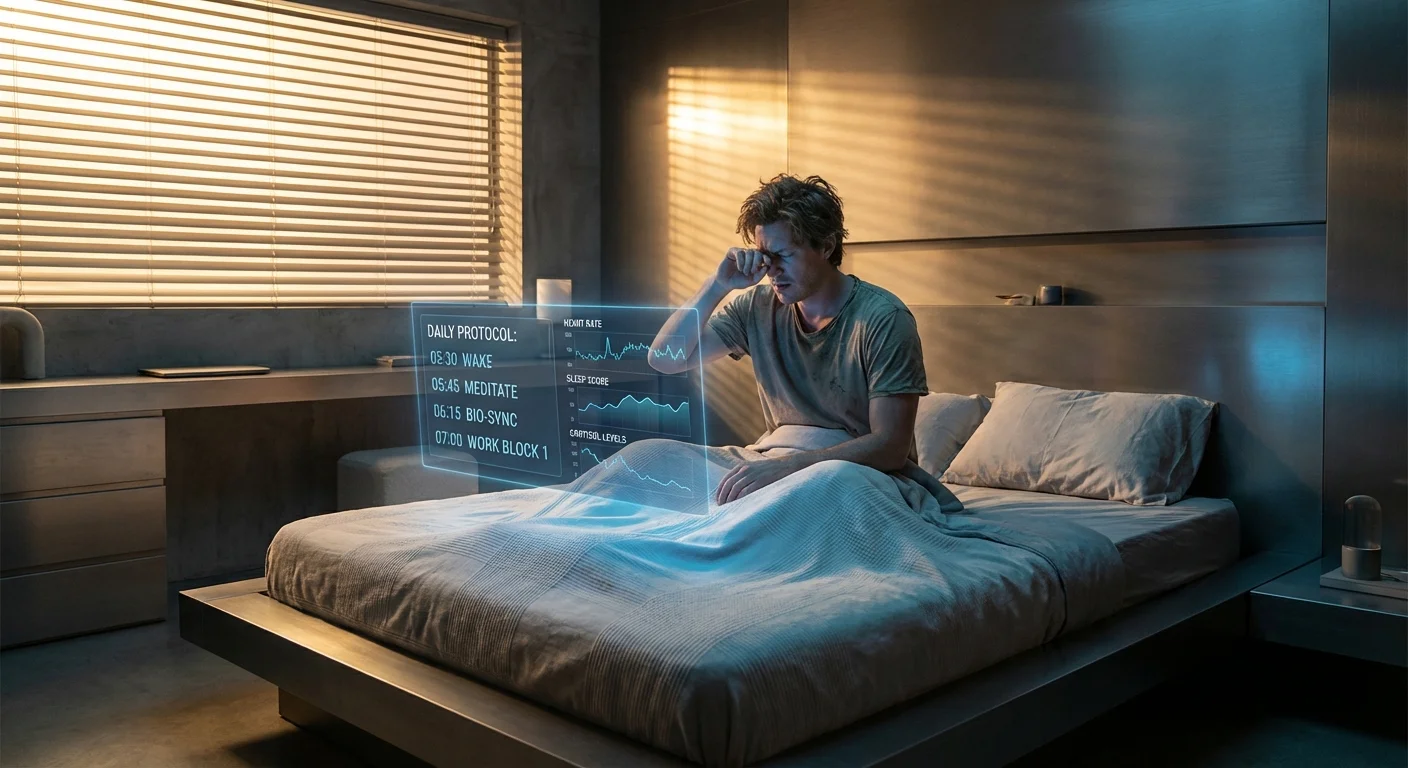
For the past five years, my morning routine looked exactly like this: my alarm would blare at 7:00 AM, I would hit snooze at least three times, and by 7:30 AM, I was aggressively doomscrolling through social media with one eye closed. By the time I finally dragged myself out of bed, I was already behind schedule, fueled by cortisol, morning anxiety, and a frantic rush to the coffee machine.
Sound familiar? I was a victim of my own morning chaos. Despite reading countless self-help books and listening to every high-performance productivity podcast available, I lacked the discipline to implement a sustainable routine. The friction of making good choices at 7:00 AM was simply too high. That is, until I decided to completely outsource my discipline to artificial intelligence.
I gave ChatGPT complete control over my mornings for 30 days. I asked the AI to analyze my bad habits, my professional goals, and my energy levels, and to construct the ultimate, scientifically backed morning routine. What followed was a month of extreme productivity, profound biological shifts, and a terrifying realization about the future of human optimization and free will.
The Setup: Handing Over the Reins to AI
Before beginning this experiment, I needed to give ChatGPT enough context to build a tailored plan. I didn’t just type, “Give me a good morning routine.” If you want exceptional results from AI, you have to engineer a highly specific prompt. I designed a prompt to leverage the AI’s vast, scraped knowledge of neurobiology, circadian rhythms, and habit formation.
My exact prompt looked like this: “Act as a world-class neuroscientist and high-performance productivity coach. I want to completely overhaul my morning routine. I wake up at 7:00 AM, struggle with brain fog until 10:30 AM, and work from home as a writer. My goals are to eliminate morning anxiety, maximize deep work focus, and improve my overall physical health. Design a strict, minute-by-minute morning routine for me to follow for the next 30 days. Base your recommendations on peer-reviewed science, circadian rhythm optimization, and proven psychological frameworks.”
Within seconds, ChatGPT spat out a meticulously detailed schedule. It was intimidating, optimized to the absolute limit, and left absolutely no room for human error or laziness. Here is a breakdown of the routine the AI demanded I follow, compared to my previous chaotic mornings.
The AI Master Plan vs. My Old Routine
| Time | My Old Routine (The Chaos) | The ChatGPT Routine (The Protocol) |
|---|---|---|
| 6:30 AM | Hit Snooze | Wake up immediately. No snooze. Drink 16oz of water with a pinch of sea salt. |
| 6:35 AM | Hit Snooze Again | 10 minutes of direct sunlight exposure (go outside) + light stretching. |
| 6:45 AM | Doomscrolling in bed | NSDR (Non-Sleep Deep Rest) or 10-minute mindfulness meditation. |
| 6:55 AM | Panic and rush to bathroom | Cold shower (2 minutes minimum) to spike dopamine and adrenaline. |
| 7:10 AM | Drink coffee on an empty stomach | High-protein breakfast (30g protein). NO COFFEE YET. |
| 7:30 AM | Start checking emails in a haze | Review daily top 3 priorities. Journaling (brain dump). |
| 8:00 AM | More emails, feeling sluggish | 90-minute Deep Work Block (Phone in another room, strict focus). |
| 9:30 AM | Finally feel somewhat awake | First cup of coffee. Reward for deep work completion. |
Week 1: The Shock to the System
Day one was utterly miserable. When my newly adjusted alarm went off at 6:30 AM, my muscle memory begged me to hit the snooze button, but the rules of the 30-day challenge strictly forbade it. I stumbled into the kitchen, chugged the salted water (which the AI noted was for adrenal support and hydration), and forced myself outside into the brisk, unforgiving morning air.
The early sunlight exposure, a technique heavily popularized by neurobiologist Dr. Andrew Huberman, was supposed to reset my circadian clock. At the time, it just felt incredibly cold. But the real torture was the cold shower. Standing under freezing water for two minutes at 6:55 AM felt like a cruel and unusual punishment. I was shivering, angry, and seriously questioning my life choices.
However, by 8:00 AM, something remarkable happened. As I sat down for my 90-minute deep work block, I didn’t feel the familiar brain fog that usually plagued my mornings. The combination of the cold exposure (which naturally spikes baseline dopamine levels by up to 250%) and the delayed caffeine intake meant my energy levels were incredibly stable and sharp. For the first time in months, I wrote for 90 minutes straight without checking my phone once. The physical friction of the first week was intense, but the undeniable psychological results kept me going.
Week 2: The Terrifying Realization
By the second week, the physical shock to my system had worn off, and my biology began to adapt. I was naturally waking up a minute or two before my alarm even sounded. The cold showers were no longer agonizing; they were exhilarating and clarifying. I was completing more deep, meaningful work by 9:30 AM than I usually did by 3:00 PM in my previous life.
But this is exactly where the experiment took a terrifying turn. I realized that a string of code, a large language model trained on internet text, understood my biological and psychological needs better than I did. For my entire adult life, I had assumed my morning lethargy was just a permanent personality trait. “I’m just not a morning person,” I would tell my friends and colleagues.
ChatGPT proved that was a total lie. I wasn’t genetically predisposed to being lazy or unfocused in the morning; I simply had terrible physiological habits. The AI completely stripped away my excuses. It ruthlessly optimized my dopamine baseline, managed my cortisol awakening response by forcing me to delay caffeine, and manipulated my brain into a state of flow through strict environmental design.
It was terrifying because it felt like I had been hacked. The AI had handed me a cheat code to my own nervous system. I felt less like a complex human making conscious choices and more like a biological machine executing a highly efficient, pre-programmed algorithm. My daily decision fatigue vanished completely because I didn’t have to think; I just had to obey the prompt.
Week 3: The Rebellion and The Pivot
Around day 18, I hit a psychological wall. While my productivity metrics were through the roof and my focus was unparalleled, I felt distinctly robotic. Every single morning was a clinical, ruthless execution of tasks. I missed the quiet, messy, unstructured joy of a slow morning. I missed sipping a hot cup of coffee while staring blankly out the window without a timer running.
I decided to consult my AI overlord. I opened the chat and typed: “ChatGPT, the routine is working flawlessly, but I feel like a robot. I’m experiencing psychological burnout from the relentless hyper-optimization. How can we adjust this schedule to make it feel more human and joyful, without losing the neurobiological benefits?”
The AI’s response was surprisingly empathetic and nuanced. It explained that hyper-optimization often leads to psychological fatigue if it is not balanced with unstructured play and autonomy. It suggested tweaking the routine by introducing a 15-minute “Joy Block” right after the sunlight exposure. During this time, I was strictly instructed to do something purely for the sake of enjoyment—listening to a favorite vinyl record, sketching, or reading a chapter of a fiction book.
It also adjusted my cold shower requirement to “alternating days,” noting that psychological sustainability is vastly more important than marginal physiological gains. This small adjustment was exactly what I needed to survive the rest of the month. It proved that AI isn’t just good at being rigid and demanding; it’s incredibly adept at pivoting based on highly subjective human feedback.
Week 4: The Integration and The New Normal
The final week of the 30-day experiment was a complete revelation. With the newly adjusted, “humanized” routine, I hit a perfect stride. The crippling morning anxiety that used to plague my waking hours was completely eradicated. Because I wasn’t immediately flooding my brain with the stressful news cycle or urgent emails while lying in bed, my baseline stress levels dropped significantly.
Furthermore, delaying my caffeine intake to 9:30 AM entirely cured my dreaded afternoon crash. Previously, I heavily relied on a 2:00 PM iced coffee just to survive the rest of the workday. Now, because I allowed my body to clear adenosine naturally in the morning, my energy remained incredibly stable until dinnertime.
When the 30 days were finally up, I didn’t celebrate by sleeping in and doomscrolling. The AI’s protocol had literally rewired my habits. The routine had simply become my natural rhythm.
Key Takeaways: What AI Taught Me About Being Human
If you are considering using AI to optimize your daily life, here are the most critical lessons I learned from this terrifyingly effective 30-day experiment:
- Your Biology Craves Routine: We like to think we crave spontaneity, but our circadian rhythms desperately crave predictability. Waking up and getting sunlight at the exact same time every day revolutionized my sleep quality.
- Delayed Caffeine is a Superpower: Waiting 90 to 120 minutes after waking up to drink your first cup of coffee prevents the dreaded afternoon crash. It sounds impossible, but the science works flawlessly.
- AI Eliminates Decision Fatigue: The hardest part of a morning routine is deciding to actually do it. Having an AI mandate the specific steps removes the internal mental negotiation. You don’t think; you just act.
- Beware of the Robot Trap: Endless optimization without joy eventually leads to severe burnout. Always prompt the AI to include dedicated space for humanity, rest, and unstructured time.
Final Thoughts
Letting ChatGPT plan my morning routine started as a quirky, internet-friendly productivity experiment, but it ended up being a profound lesson in neurobiology and self-discipline. The terrifying part wasn’t that the artificial intelligence controlled me; it was realizing exactly how much human potential I had been wasting by leaving my mornings up to chance and fleeting motivation.
We are rapidly entering an era where AI won’t just write our emails, generate art, or code software; it will help us debug our own biology. If you find yourself stuck in a rut, unmotivated, and perpetually exhausted, I highly recommend asking ChatGPT to rewrite your morning. Just be completely prepared—you might never be able to look at the snooze button the same way again.
Frequently Asked Questions (FAQ)
Is it really necessary to take a cold shower every single morning?
According to the AI (and the neuroscientists whose data it trained on), cold exposure significantly increases dopamine and epinephrine, providing incredibly long-lasting energy and laser focus. However, if it causes you immense psychological distress or you have health concerns, alternating days or simply ending a warm shower with 30 to 60 seconds of cold water can still offer substantial benefits.
Why did ChatGPT tell you to delay your morning coffee?
When you wake up, a chemical called adenosine (which makes you feel sleepy) is still actively clearing from your brain. If you drink coffee immediately upon waking, the caffeine physically blocks the adenosine receptors. Once the caffeine inevitably wears off a few hours later, all that trapped adenosine floods your nervous system at once, causing a massive afternoon crash. Delaying caffeine by 90-120 minutes prevents this entirely.
What specific prompt should I use to get my own optimized routine?
Be highly specific about your current wake times, your specific struggles (e.g., severe brain fog, anxiety, lack of motivation), and your ultimate goals. Ask the AI to act as a “world-class neuroscientist and productivity coach” and request that the routine be strictly based on circadian rhythm optimization and habit formation science.
Can I use this AI method if I work the night shift?
Absolutely. You can instruct ChatGPT to explicitly shift the “circadian clock” of the routine to match your schedule. The core physiological principles—getting bright light exposure immediately upon waking, delaying caffeine intake, and temperature regulation—apply regardless of what time your personal “morning” actually starts.
Did you actually keep the routine after the 30 days were over?
Yes, although I now follow it with a more sustainable 80/20 rule. I strictly adhere to the AI’s protocol on weekdays to maximize my professional work output, but I intentionally allow myself unstructured, slow mornings on the weekends to relax, recharge, and feel human.