 11
11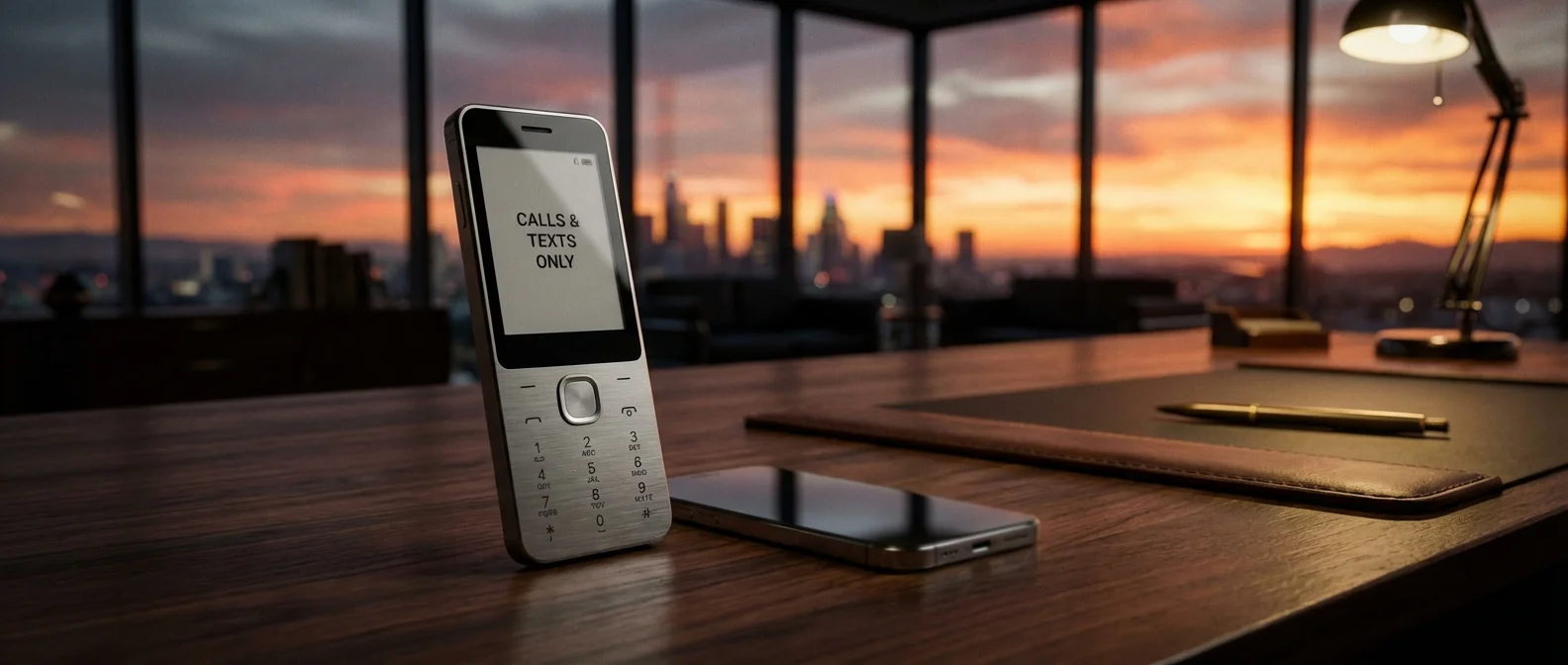
It is the ultimate modern paradox: the very architects of our hyper-connected, notification-driven digital world are actively unplugging. In 2024, a silent but powerful revolution is sweeping through the elite circles of Silicon Valley. Tech billionaires, venture capitalists, and startup founders are locking their gleaming iPhone 15s and advanced Android devices in desk drawers, opting instead for minimalist, screen-free, or dramatically simplified devices. Welcome to the era of the ‘Dumb Phone’ revolution.
For over a decade, the smartphone has been the ultimate Swiss Army knife of modern life. It is our bank, our camera, our map, our social life, and our primary connection to the global pulse. Yet, the engineers and executives who built this attention economy are increasingly stepping away from it. Why? Because they know exactly how the sausage is made. They understand the neuroscience of addiction that powers every push notification, and they are deciding that true luxury in 2024 isn’t having the most advanced supercomputer in your pocket—it is having the freedom to not be reached.
To understand this shift, we must look at the foundation of modern app development. The ecosystem was built on the ‘attention economy,’ a business model where user engagement and screen time are directly translated into advertising revenue. Tech executives are intimately familiar with the behavioral psychology techniques—often borrowed directly from casino slot machines—used to keep users endlessly scrolling. From infinite scroll mechanisms to the precise shade of red used for notification badges, every pixel is weaponized against human attention spans.
Silicon Valley elites are realizing that their cognitive bandwidth is their most valuable asset. A recent internal survey among top-tier venture capitalists revealed that nearly 40% have implemented strict ‘no smartphone’ protocols during deep work sessions, and a growing faction has downgraded their daily carry entirely. By switching to a dumb phone, they eliminate the temptation of the infinite scroll, allowing them to engage in ‘deep work’ (a term popularized by computer science professor Cal Newport) for hours without the destructive impact of context-switching.
Human brains are not wired for parallel processing. When an executive is interrupted by an email, a Slack ping, or an Instagram notification, it takes an average of 23 minutes to return to the original state of deep focus. Over an eight-hour workday, just a handful of these micro-interruptions can destroy a professional’s productivity. Dumb phones—which typically only handle voice calls, SMS, and perhaps an alarm clock—act as a physical barrier against these productivity-killing interruptions.
If minimizing screen time has you craving deeper mental clarity, discover how to activate your brain’s natural Theta waves for laser-like focus and breakthrough ideas.
Beyond the cognitive benefits, there is a darker, more pragmatic reason tech executives are abandoning their flagship devices: extreme data surveillance. Modern smartphones are the most sophisticated tracking devices ever created. They monitor location data with pinpoint accuracy, record biometric data, track purchasing habits, and listen for wake words. Even when explicitly instructed not to track across apps, metadata leakages provide an incredibly accurate mosaic of a user’s life.
The people who write the algorithms understand the loopholes. They know that data brokers build massive profiles on individuals, which are then sold to the highest bidder. By carrying a dumb phone, executives dramatically reduce their digital footprint. A device that connects only to cellular towers for basic SMS and voice calls leaves far less actionable data behind than a device pinging Wi-Fi networks, Bluetooth beacons, and GPS satellites hundreds of times an hour.
The term ‘dumb phone’ might bring to mind the clunky, plastic brick phones of the late 90s, but the 2024 iterations are sleek, purposeful, and designed for a modern aesthetic. Devices like the Light Phone II and the Punkt MP02 have become massive status symbols in Silicon Valley cafes. They feature e-ink displays, premium matte finishes, and absolutely no app stores. They are intentionally designed to be used as little as possible.
| Feature Comparison | Modern Smartphone (e.g., iPhone 15) | Premium Dumb Phone (e.g., Light Phone II) |
|---|---|---|
| Primary Function | Infinite media consumption, app ecosystem | Voice calls, basic SMS, alarms |
| Battery Life | 18-24 hours (requires daily charging) | 3 to 7 days on a single charge |
| Distraction Level | Extremely High (constant push notifications) | Zero (no apps, no algorithms) |
| Privacy Vulnerability | High (location tracking, microphone, cookies) | Low (basic cellular triangulation only) |
| Cognitive Load | Overwhelming (context switching) | Minimal (allows for sustained deep thought) |
In a fascinating cultural twist, the dumb phone has become the ultimate ‘stealth wealth’ flex. In the past, owning the newest, most expensive piece of technology signaled success. Today, everyone has a smartphone. The new luxury is inaccessibility. Pulling out a minimalist e-ink phone at a business lunch signals to peers that your time is incredibly valuable, you do not need to be constantly online to manage your wealth, and you have delegated the minutiae of daily digital life to assistants or scheduled desktop hours. It is the technological equivalent of wearing a quiet, unbranded luxury watch rather than a flashy, diamond-encrusted piece.
You don’t need to be a billionaire to reap the benefits of the dumb phone revolution. However, entirely ditching a smartphone is difficult for the average worker who relies on QR codes, multi-factor authentication, and GPS navigation. Here is how modern professionals are adopting a hybrid approach:
Traditional dumb phones only support SMS and voice calls. However, a subcategory called ‘feature phones’ (like certain modern Nokia re-releases) run on platforms like KaiOS, which do offer stripped-down versions of WhatsApp. You will lose iMessage, which forces communication back to universal SMS standards.
Many dumb phone users return to using standalone GPS devices for their cars, printing directions for complex trips, or simply asking for directions. Interestingly, some premium minimalist phones, like the Light Phone II, offer a very basic, text-based navigation tool that provides directions without the distracting interface of a full map app.
This revolution has also sparked a resurgence in dedicated media players. Many executives are purchasing modern MP3 players or iPods. Some premium dumb phones do offer basic podcast tools or music playback, but the intention is always to separate the ‘tool’ from the ‘distraction machine.’
While no device that connects to a cellular network is 100% immune to interception (like SIM swapping or stingray devices), dumb phones lack the complex operating systems and third-party apps that act as the primary attack vectors for modern malware, spyware, and tracking software. They offer a drastically reduced attack surface.
The initial phase often involves a ‘fear of missing out’ (FOMO) withdrawal period. However, users consistently report that after the first two weeks, the anxiety fades, replaced by a profound sense of relief. You quickly learn that very few things are truly urgent, and true emergencies will come through as a phone call.