
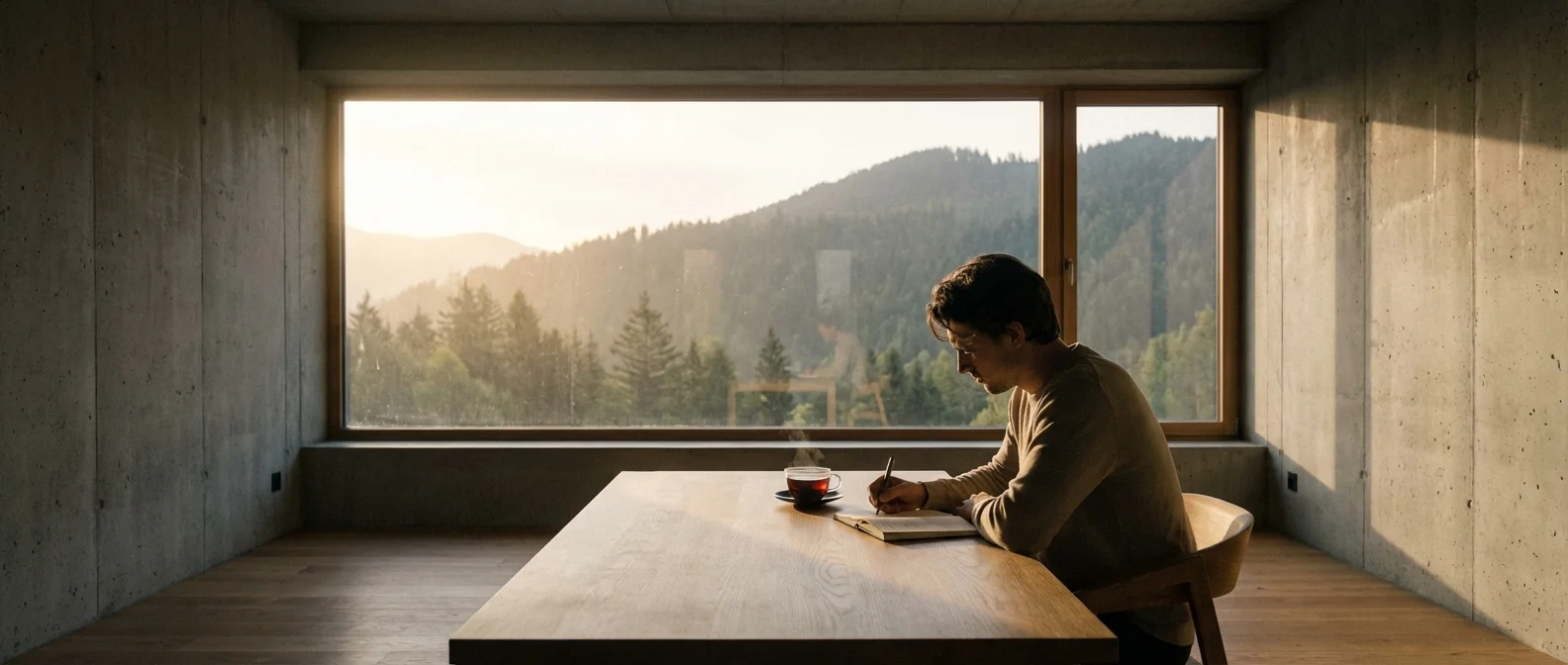
Have you ever woken up, grabbed your phone, and suddenly realized forty-five minutes have vanished into a digital abyss? You are certainly not alone. A few months ago, my brain felt like a web browser with a hundred tabs open simultaneously. I was constantly exhausted, my attention span was practically non-existent, and even the simplest tasks felt like climbing Mount Everest. The constant notifications, the doom-scrolling, and the endless stream of dopamine hits had left my cognitive functions in tatters.
I knew I needed a radical reset. Incremental changes, like putting my phone on silent, were no longer cutting it. I needed to fundamentally rewire my brain. That is when I stumbled upon a productivity concept that sounded both deeply intimidating and incredibly intriguing: Monk Mode.
What Exactly is ‘Monk Mode’?
Monk Mode is not a new concept, but it has recently gained massive traction among entrepreneurs, creators, and high-performers. At its core, Monk Mode is a period of intense focus and extreme discipline where you isolate yourself from modern distractions to achieve a specific goal or reset your baseline dopamine levels. It is about stripping away the non-essentials to reclaim your mental clarity.
While some people commit to Monk Mode for months, locking themselves away from society, I decided to take a more sustainable approach: I applied the Monk Mode philosophy exclusively to my morning routine. The goal was to protect the first four hours of my day at all costs. No compromises. No excuses.
My 5 Iron-Clad Rules for the 30-Day Challenge
- No Screens Before Noon: No smartphone, no social media, no news, and absolutely no email for the first four hours of the day. The only technology allowed was my computer for deep work, with internet access strictly limited to essential sites.
- Daily Movement: At least 30 minutes of physical exertion immediately after waking up. This could be a brisk walk, yoga, or weightlifting, but it had to be done in silence without music or podcasts.
- Mandatory Meditation: 15 minutes of mindfulness meditation to train my brain to sit with boredom and quiet the internal chatter.
- Zero Liquid Calories: Only water, black coffee, or plain green tea. No sugar crashes allowed.
- 90 Minutes of Deep Work: The core of the routine. 90 minutes of uninterrupted, highly focused work on my most important, needle-moving task of the day.
The Daily Monk Mode Schedule
To make this work, I had to create a rigid, non-negotiable schedule. Here is exactly what my mornings looked like during the 30-day experiment:
| Time | Activity | The ‘Why’ (Purpose) |
|---|---|---|
| 5:30 AM | Wake up & Hydrate (16oz water) | Rehydrate the brain after 8 hours of sleep. Jumpstart metabolism. |
| 5:45 AM | Silent Exercise (30 mins) | Flush out cortisol, release natural endorphins, and wake up the nervous system. |
| 6:20 AM | Cold Shower & Dress | Build mental resilience. If you can survive cold water, you can survive a hard task. |
| 6:40 AM | Meditation (15 mins) | Lower the baseline dopamine. Practice observing thoughts without reacting to them. |
| 7:00 AM | Deep Work Block (90 mins) | Tackle the hardest, most cognitively demanding task while willpower is at its absolute highest. |
| 8:30 AM | Journaling & Planning (15 mins) | Reflect on the deep work session and map out the rest of the day’s trivial tasks. |
| 8:45 AM | First Meal & Coffee | Reward the brain for completing the hardest part of the day. |
The 30-Day Breakdown: A Journey from Pain to Peak Performance
Week 1: The Agonizing Withdrawal
I am not going to sugarcoat it: the first week was absolute torture. On day one, I woke up, and my hand instinctively reached for a phone that I had purposely left in another room. During my silent morning walk, the absence of a podcast playing in my ears was deafening. My brain, addicted to constant stimulation, was screaming for a dopamine hit. When I sat down for my 90-minute deep work block, my focus lasted exactly seven minutes before I felt a physical urge to open a new browser tab. I felt irritable, foggy, and surprisingly exhausted by 10:00 AM. It was clear proof of how chemically dependent I had become on cheap dopamine.
Week 2: The Fog Begins to Lift
Around day nine, something shifted. Waking up at 5:30 AM stopped feeling like a punishment. The cold showers went from feeling like icy torture to an exhilarating surge of morning energy. More importantly, the ‘twitch’—that subconscious urge to check my phone—started to fade. I began to look forward to the silence. My 90-minute deep work blocks were still challenging, but I found myself pushing through the 20-minute barrier. Once I passed that mark, the friction disappeared, and I began to experience brief flashes of true ‘flow state.’
Week 3: The Productivity Explosion
By the third week, the Monk Mode routine was running on autopilot. Because I was front-loading my most difficult tasks into the pristine, distraction-free environment of the early morning, my output skyrocketed. I was accomplishing more in those 90 minutes than I used to achieve in an entire eight-hour workday. Without the mental baggage of reading stressful emails or scrolling through toxic social media feeds first thing in the morning, my mind remained clear, optimistic, and fiercely focused. I also noticed an unexpected side effect: my anxiety levels plummeted.
Week 4: The Complete Brain Rewire
As I entered the final stretch of the 30-day challenge, I realized that my baseline for stimulation had completely changed. Things that used to feel boring—like reading a dense book or sitting quietly with a cup of black tea—now felt deeply engaging. I had successfully repaired my attention span. My brain no longer craved the frantic, chaotic energy of the internet. I felt a profound sense of control over my own mind. The Monk Mode routine had not just improved my productivity; it had fundamentally rewired how I interact with the world around me.
The Neuroscience: Why Monk Mode Actually Works
The success of the Monk Mode morning routine is not magic; it is pure neuroscience. When you check your phone the moment you wake up, you are flooding your brain with cheap, unearned dopamine. This sets a high threshold for the rest of the day. Suddenly, writing a report or studying for an exam feels excruciatingly dull because it cannot compete with the hyper-stimulating algorithms of social media.
By delaying gratification and replacing cheap dopamine with ‘hard’ dopamine (like exercise, cold exposure, and deep focus), you reset your brain’s reward system. You train your brain to release dopamine as a reward for effort, rather than as a cheap thrill. This concept, rooted in neuroplasticity, proves that our brains are incredibly adaptable. If you starve the brain of instant gratification, it will naturally recalibrate to find joy and engagement in sustained focus.
Supercharge Your Brain’s Potential While in Monk Mode
Want to enhance your focus and truly rewire your brain even faster? Discover how this 7-minute audio track activates your brain’s genius wave to accelerate your Monk Mode results.
How You Can Start Your Own Monk Mode Journey
If you are feeling burnt out, easily distracted, or frustrated with your lack of progress, I highly encourage you to try the Monk Mode morning routine. However, you do not have to copy my exact schedule. The key is to design a protocol that works for your specific lifestyle. Here is how to start:
- Start Small: If 30 days feels overwhelming, commit to just 7 days. Even a single week of morning Monk Mode will yield noticeable changes in your mental clarity.
- Define Your Rules Clearly: Write your rules down on a piece of paper and tape them to your bathroom mirror. Vague intentions will fail when morning fatigue hits.
- Prepare the Night Before: You cannot execute a perfect morning routine if your environment is a mess. Set out your workout clothes, prep your coffee maker, and leave your phone charging in another room before you go to sleep.
- Forgive Your Failures: If you accidentally check an email or skip a cold shower, do not abandon the entire experiment. Acknowledge the slip-up and get back on track the very next day.
Frequently Asked Questions (FAQ)
Can I drink coffee during Monk Mode?
Yes, but it is highly recommended to delay your caffeine intake for at least 90 minutes after waking up. Consuming caffeine immediately upon waking interferes with the natural clearing of adenosine (the sleep chemical) in your brain, which can lead to a severe afternoon crash. Drink water first, exercise, and save the coffee as a reward for completing your deep work block.
What if I have kids or a chaotic household?
If you have children, executing a rigid 4-hour morning routine might be impossible. In this case, adapt the philosophy. Can you wake up just 60 minutes before your family to get a pure, distraction-free hour of deep work and meditation? Monk Mode is about controlling the controllables. Even a 45-minute micro-Monk Mode routine can dramatically shift the trajectory of your day.
Is music allowed during deep work?
It depends on the type of music. Podcasts, audiobooks, and music with lyrics will split your attention and degrade your focus. However, instrumental music, lo-fi beats, binaural beats, or white noise can actually help block out environmental distractions and guide your brain into a flow state.
Will Monk Mode make me anti-social?
Not at all. Because I was utilizing Monk Mode strictly in the mornings, I actually became more present and engaged during my social interactions later in the day. By getting my most important work done early, I was not constantly checking my phone or worrying about uncompleted tasks when spending time with friends and family.
What is the hardest part of the 30-day challenge?
The first three days are undeniably the hardest. Your brain will actively fight against the lack of stimulation. You will feel bored, antsy, and perhaps even a little anxious. This is the withdrawal phase. If you can push through the initial discomfort of the first week, the mental clarity waiting for you on the other side is entirely worth it.
Ultimately, the Monk Mode morning routine taught me a valuable lesson: our attention is our most precious asset. In a world designed to distract us, choosing focus is the ultimate superpower. Take back your mornings, and you will inevitably take back your life.