
The Breaking Point: A Life Measured in Screen Time
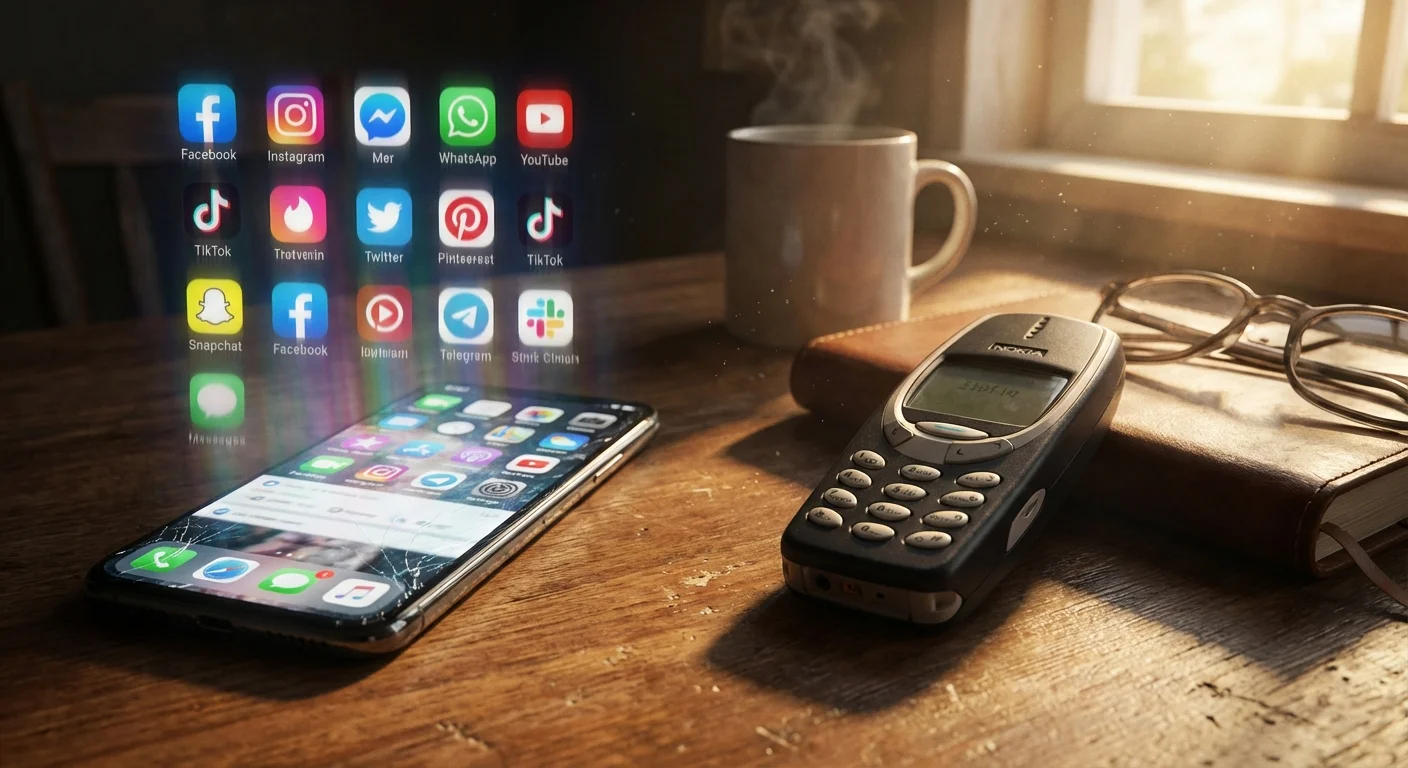
It was a Tuesday evening when I finally hit my breaking point. I had just spent 45 minutes mindlessly scrolling through short-form videos, completely oblivious to the cold cup of coffee sitting next to me. When I finally checked my phone’s digital wellbeing dashboard, the numbers stared back at me like an accusation: 6 hours and 42 minutes of daily screen time. That was nearly a third of my waking life, gone into a digital black hole. I wasn’t just distracted; I felt fragmented. My attention span had eroded to the point where watching a two-hour movie without checking my phone felt like a superhuman feat. I was constantly anxious, perpetually exhausted, and suffering from a severe case of brain fog. It was in that moment of digital despair that I made a radical decision: I was going to lock my $1,200 smartphone in a drawer and switch to a $40 ‘dumbphone’ for 30 days. No social media, no high-speed browsing, no push notifications. Just calls, text messages, and an alarm clock. I wanted to see if I could reclaim my brain. What followed was a rollercoaster of withdrawals, profound boredom, and ultimately, a complete cognitive rewiring that I never saw coming.
Setting the Ground Rules
Before embarking on this digital detox, I needed a plan. Switching to a dumbphone in a hyper-connected world isn’t as simple as just swapping SIM cards. Our lives are deeply integrated with these glass rectangles—from banking and navigation to work communication and social lives. Here were my rules for the 30-day experiment:
- The Device: A basic Nokia 225 4G. It had buttons, a terrible camera, and absolutely no app store.
- Work Exceptions: I could use my laptop for work-related emails and Slack during designated business hours, but once the laptop was closed, I was offline.
- Navigation: I had to map out my routes before leaving the house, just like we did in the early 2000s, or rely on a standalone GPS device if absolutely necessary.
- Music: I dug out an old MP3 player and loaded it with downloaded music and podcasts for the gym and commutes.
Week 1: The Phantom Vibrations and Dopamine Withdrawals
I won’t sugarcoat it: the first week was agonizing. It felt like trying to quit a deeply ingrained habit cold turkey. On day one, I experienced what psychologists call ‘phantom vibration syndrome’—the illusory feeling that my phone was buzzing in my pocket. My hand would reflexively reach into my pocket every five minutes, only to grasp a lightweight piece of plastic that offered zero digital gratification. The hardest part was the micro-moments of boredom. Waiting in line at the grocery store, sitting on the toilet, waiting for a friend at a coffee shop—these empty spaces in time suddenly felt incredibly vast and uncomfortable. Without the endless feed of dopamine from Instagram or Twitter to pacify my mind, my brain went into a state of panic. I felt anxious, twitchy, and profoundly disconnected from the world. I worried I was missing important news, urgent messages, or cultural moments. But by the end of the week, the panic began to subside, leaving behind a strange, unfamiliar quiet.
Week 2: Rediscovering Boredom and the Default Mode Network
Something magical happened around day ten. The crushing weight of FOMO (Fear Of Missing Out) began to lift, replaced by a sense of liberation. JOMO—the Joy Of Missing Out—took its place. Because I couldn’t reach for my phone during idle moments, I was forced to simply exist in the world. I started looking around. I noticed the architecture of the buildings on my commute. I started striking up brief conversations with strangers. Most importantly, I let my mind wander. Neuroscience tells us that when our brains are not engaged in an active, focused task, a brain network called the Default Mode Network (DMN) lights up. This is the network responsible for daydreaming, creative problem-solving, and deep self-reflection. For years, I had been suppressing my DMN by constantly feeding my brain new information via my smartphone. By week two of the dumbphone experiment, my DMN was firing on all cylinders again. I started having creative ideas for work while waiting in line at the post office. I found myself processing lingering emotional stress that I had previously buried under hours of TikTok scrolling. The brain fog was lifting.
Week 3: The Return of Deep Work and Meaningful Connections
As I entered the third week, the cognitive benefits became undeniable. My attention span, which had felt fractured and fleeting, began to heal. I sat down to read a book on a Sunday afternoon and, to my astonishment, read for two hours straight without feeling the urge to do something else. In my professional life, my productivity skyrocketed. Without the constant interruption of WhatsApp notifications and the temptation to check news sites, I achieved states of ‘flow’—deep, uninterrupted focus—that I hadn’t experienced in years. My relationships improved, too. When I met friends for dinner, my dumbphone stayed in my pocket (it wasn’t like there was anything interesting to look at on it anyway). I made sustained eye contact. I listened deeply. My friends noticed the difference; they commented that I seemed more ‘present’ and relaxed. The irony of disconnecting from social media was that I had never felt more genuinely connected to the people actually sitting in front of me.
Week 4: The New Baseline
By the final week, the dumbphone didn’t feel like an experiment anymore; it felt like a lifestyle choice. I had completely adjusted to the slower pace of life. The frantic, urgent energy that used to govern my days had evaporated. My dopamine baseline—the chemical metric that dictates our motivation and pleasure—had reset. Things that used to seem incredibly boring (like going for a walk without a podcast, or just sitting on a park bench) were now deeply satisfying and relaxing.
The 30-Day Metrics: Smartphone vs. Dumbphone
To truly understand the impact of this experiment, I tracked several key metrics throughout the 30 days. The results were staggering.
| Metric | Before (Smartphone) | After 30 Days (Dumbphone) |
|---|---|---|
| Daily Screen Time (Mobile) | 6 hrs 42 mins | 14 mins |
| Average Sleep Duration | 6 hrs 15 mins | 8 hrs 10 mins |
| Books Read Per Month | 0.5 | 4 |
| Self-Reported Anxiety Level | High (8/10) | Low (3/10) |
As the data shows, the shift was profound. My sleep quality drastically improved because I wasn’t exposing my eyes to blue light or my brain to stressful news right before bed. My reading habit came back with a vengeance, filling the hours I previously spent scrolling.
Why My Brain Felt ‘Rewired’
The term ‘rewired’ isn’t just an exaggeration; it’s rooted in neuroplasticity. Our brains physically adapt to the stimuli we provide. Smartphones are essentially slot machines in our pockets, delivering unpredictable, variable rewards that keep our dopamine systems in a constant state of hyperarousal. Over time, this downregulates our dopamine receptors, meaning we need more and more stimulation to feel normal, leaving us numb to the simple pleasures of life. By removing that supernormal stimulus for 30 days, I allowed my brain’s reward system to heal. The neural pathways associated with sustained attention, delayed gratification, and introspection grew stronger. I had starved the distraction circuits and fed the focus circuits. It was the ultimate mental reset.
Unlock Your Brains Full Potential
Want to accelerate your mental clarity and focus even further after a digital detox? Discover the brainwave ritual designed to naturally enhance your cognitive power, stimulate your focus, and eliminate brain fog.
The Aftermath: Am I Going Back?
Day 31 arrived, and I faced a choice: keep the dumbphone, or go back to the smartphone? To be completely honest, I did turn my smartphone back on. The reality of modern life is that certain conveniences—like mobile banking, ridesharing apps, and high-quality cameras to capture memories—are genuinely useful. However, my relationship with the device has fundamentally changed. I turned off all non-essential notifications. I deleted every social media app from the phone (I only check them on my desktop now). I implemented a strict ‘no phones in the bedroom’ rule. The 30-day dumbphone experiment taught me that my phone is a tool, not a companion. It works for me; I no longer work for it. If you are feeling burnt out, overwhelmed, or creatively blocked, I cannot recommend a dumbphone detox enough. It is difficult, uncomfortable, and wonderfully transformative. It will force you to face yourself, and in the silence of that encounter, you might just find your mind again.
Frequently Asked Questions (FAQ)
1. How did you handle navigation without Google Maps?
It was an adjustment! I started looking up directions on my laptop before leaving the house and jotting them down on a sticky note. For longer road trips, I relied on a standalone Garmin GPS system or printed out MapQuest-style directions. It actually improved my sense of direction significantly.
2. What about WhatsApp and staying in touch with friends?
I informed my close friends and family before the experiment started, telling them to call or use standard SMS if they needed me. Surprisingly, people adapted quickly. The conversations I did have were more intentional, rather than endless streams of memes and casual chatter.
3. Didn’t you miss listening to music or podcasts?
Yes, the convenience of Spotify was deeply missed. However, I bought a cheap MP3 player and loaded it with downloaded MP3s and podcasts via my computer. It reminded me of the iPod nano days and made me appreciate the music I was listening to much more.
4. Is it expensive to switch to a dumbphone?
Not at all. The handset itself usually costs between $20 to $60. Many carriers offer incredibly cheap talk-and-text plans for non-smartphones. In fact, you will likely save money by downgrading your data plan.
5. What do I do in an emergency without a smartphone?
A dumbphone is still a mobile phone. You can dial emergency services, call a tow truck, or text a loved one. What you can’t do is mindlessly scroll while waiting for help to arrive. For absolute peace of mind, you can keep a deactivated smartphone in your glovebox for offline GPS or extreme emergencies.