The Dream of Waking Up to Daily Sales Notifications
Imagine waking up on a Tuesday morning, pouring your first cup of coffee, and checking your phone only to see three new sales notifications. You didn’t package a physical item. You didn’t pay for shipping. You didn’t even interact with the customer. The money just appeared in your account while you were sleeping. This isn’t some elusive internet fairy tale; it is the very real power of selling digital products. And the best part? You don’t need a graphic design degree or expensive software to get started. You just need a weekend and a free Canva account.
We are living in the golden age of the creator economy, where “tiny” digital products are dominating marketplaces like Etsy, Gumroad, and Stan Store. Tiny products are simple, hyper-focused digital files that solve a specific problem or fulfill a specific aesthetic desire for a targeted audience. Because they are “tiny,” they are incredibly fast to make. Because they are digital, you create them once and sell them infinitely. Today, we are going to break down five tiny digital products you can build on Canva this weekend to generate passive income all year long.
What Makes a “Tiny” Digital Product So Powerful?
Before diving into the exact products, let’s understand why the “tiny” product framework is so lucrative. Traditional digital products like massive 50-video online courses or complex software take months to build. They require high upfront investment, intense market research, and huge marketing budgets. Tiny products flip this script. They are low-friction and low-risk. If you spend three hours making a printable checklist and it doesn’t sell, you haven’t lost months of your life. If it does sell, you’ve just created a permanent asset that costs you absolutely zero dollars to replicate. Tiny products rely on volume and targeted niches, allowing you to capture search traffic from people looking for immediate solutions.
5 Tiny Digital Products to Build This Weekend
1. Hyper-Niche Digital Planners & Trackers
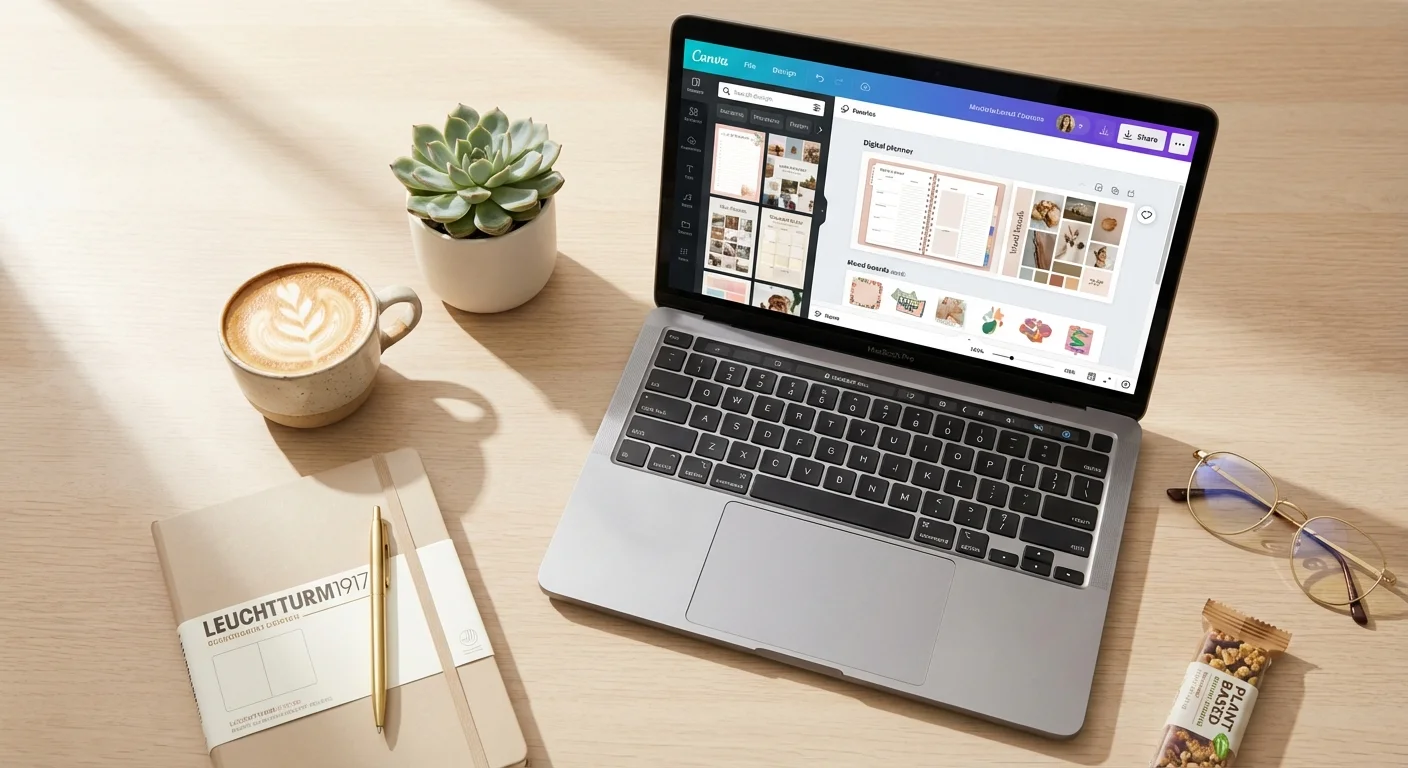
Digital planners are incredibly popular, but the secret to succeeding in 2024 isn’t making a generic “Daily Planner.” The market is flooded with those. Instead, you need to niche down aggressively. Think “ADHD Productivity Tracker,” “Houseplant Watering Schedule,” or “Puppy Training Log.” Canva makes it incredibly easy to design these. You simply set a custom dimension (like 8.5 x 11 inches for standard US letter size), use their vast library of shapes and lines to create grids, and add aesthetic fonts.
- Target Audience: Highly specific communities looking for organization tools tailored to their unique lifestyles.
- Canva Tip: Use the “Tables” feature in Canva to easily create uniform calendars and checklists without manually aligning dozens of tiny squares.
- Format to Sell: Export your final design as a standard PDF. You can also make it interactive using hyperlinked tabs if you want to cater to GoodNotes or Notability users.
2. Social Media Templates for Non-Designers
Small business owners, real estate agents, and life coaches know they need an active social media presence, but most of them are absolutely terrible at graphic design. They don’t have the budget to hire a professional agency, and they don’t have the time to learn Photoshop. This is where you come in. You can design a bundle of 15 to 30 Instagram Carousel templates or Pinterest Pins specifically for a niche (e.g., “Boho Real Estate Instagram Templates”).
- Target Audience: Solopreneurs, real estate agents, fitness coaches, and podcasters who need aesthetic branding on a budget.
- Canva Tip: Instead of selling a flattened image, you generate a “Template Link” directly inside Canva. When a customer buys your product, they get a PDF containing this link. Clicking it imports a copy of your design into their own Canva account where they can edit the text and colors.
- Format to Sell: A one-page PDF “Thank You” document containing the Canva template link and basic instructions.
3. Printable Wall Art for Aesthetic Homes
People are constantly looking for cheap, stylish ways to decorate their apartments, nurseries, and home offices. Buying physical art is expensive, but buying a digital file on Etsy for $5 and printing it at a local Walgreens or using an online service is incredibly affordable. Minimalist line art, motivational typography, and boho abstract shapes sell exceptionally well.
- Target Audience: Homeowners, renters, and interior design enthusiasts looking for budget-friendly decor.
- Canva Tip: Ensure your canvas is set to high-resolution dimensions (e.g., 24×36 inches) and ALWAYS export as a “PDF Print” to ensure the highest quality. You can also use third-party tools to convert the PDF to a high-res 300 DPI JPEG if your customers prefer image files.
- Format to Sell: A ZIP folder containing the artwork in multiple aspect ratios (2:3, 3:4, 4:5, etc.) so the customer can print it to fit any frame.
4. E-book and Lead Magnet Workbooks
Content creators and businesses constantly need lead magnets (freebies they give away in exchange for an email address) or workbooks to accompany their paid courses. Building an e-book from scratch is a daunting task for many writers. You can design an empty, beautifully formatted e-book template featuring a cover page, table of contents, chapter headers, text pages, and a call-to-action page.
- Target Audience: Course creators, bloggers, and digital marketers.
- Canva Tip: Stick to clean, readable fonts. Your goal isn’t to cram the pages with wild graphics; it’s to provide a professional layout that makes the buyer’s text look authoritative.
- Format to Sell: Canva Template Link (delivered via PDF).
5. Editable Event Invitations
The event industry is evergreen. Every day, people are planning weddings, baby showers, bachelorette parties, and birthdays. Designing an invitation template is a fantastic weekend project. You can create a beautiful “Minimalist Eucalyptus Wedding Invitation” or a “Retro Groovy Birthday Evite.”
- Target Audience: Brides-to-be, parents planning parties, and event coordinators.
- Canva Tip: Pair a beautiful cursive/script font for the names with a clean serif or sans-serif font for the location and time details. Keep the design balanced and leave plenty of whitespace.
- Format to Sell: Canva Template Link so the buyer can type in their specific event details.
Supercharge Your Passive Income Journey
Ready to scale your digital product earnings? Discover the blueprint to building consistent online revenue with THE 90 DAY WEALTH MATRIX.
The Ultimate “Tiny Product” Comparison
To help you decide which product to start with this weekend, here is a quick breakdown of creation time, earning potential, and where to sell them.
| Product Type | Est. Creation Time | Avg. Price Point | Best Platform |
|---|---|---|---|
| Niche Digital Planners | 3 – 5 Hours | $5 – $15 | Etsy / Gumroad |
| Social Media Templates | 2 – 4 Hours | $10 – $25 | Etsy / Stan Store |
| Printable Wall Art | 1 – 2 Hours | $4 – $8 | Etsy |
| E-book Templates | 4 – 6 Hours | $15 – $30 | Gumroad / Etsy |
| Event Invitations | 1 – 2 Hours | $5 – $12 | Etsy |
How to Market Your Canva Products for Maximum Visibility
Creating the product is only 20% of the battle; the remaining 80% is getting eyeballs on your listings. The beauty of digital products is that you can leverage organic search engines to do the heavy lifting for you.
- Optimize for Etsy SEO: If you are selling on Etsy, your title and tags are everything. Don’t name your product “Cute Pink Planner.” Name it “ADHD Daily Planner Printable, Neurodivergent Productivity Tracker, Pink Digital Schedule.” Use the long-tail keywords that your specific customer is typing into the search bar.
- Leverage Pinterest: Pinterest is a visual search engine, making it the perfect match for digital products. Create beautiful mockup images of your Canva designs and pin them to relevant boards. Link those pins directly to your digital storefront. Over time, a single viral pin can drive thousands of dollars in passive sales.
- TikTok Faceless Marketing: You don’t need to dance on camera to sell digital products. Record aesthetic, faceless videos of your iPad or laptop screen showing how your template or planner works. Use trending audio and clear text overlays explaining the problem your product solves.
Frequently Asked Questions (FAQ)
Can I legally sell designs made on Canva?
Yes, you can absolutely sell designs created in Canva, but there is a catch. You cannot simply take a pre-existing Canva template, change the font color, and resell it as your own. Your design must be an original creation. You can use Canva’s individual elements, fonts, and graphics to build your original layout, but you must alter and combine them to create something entirely new. Always review Canva’s commercial licensing terms to stay fully compliant.
Do I need a Canva Pro account to start?
No, you do not need Canva Pro to start. You can build incredible digital products using only Canva’s free elements and fonts. However, if you are creating Canva Template Links (where the customer opens the design in their own account), you must ensure you only use FREE elements in your design. If you use “Pro” elements, a customer with a free account will have watermarks on their design and will be prompted to pay to remove them, leading to bad reviews. Only use free elements when selling templates!
Where is the best place to sell these digital products?
Etsy is the most beginner-friendly platform because it already has millions of buyers actively searching for products. You don’t have to build your own traffic from scratch. However, Etsy takes a percentage of your sales. If you already have a social media following (like on TikTok or Instagram), platforms like Gumroad, Stan Store, or Payhip are excellent choices because they offer lower fees and let you keep more of your profit.
Is the digital product market too saturated in 2024?
“Saturation” is a myth created by people who don’t know how to niche down. Yes, the market for a generic “2024 Weekly Calendar” is saturated. However, the market for a “Backyard Chicken Egg Tracking Printable” or a “Voice Actor Audition Tracking Notion Template” is wide open. The riches are in the niches. If you solve a specific problem for a specific group of people, you will always find buyers.
Final Thoughts
Building a passive income stream doesn’t require a massive tech startup or a team of developers. By utilizing Canva, you possess a multi-million dollar design studio right in your web browser. Pick one of the five tiny products listed above, dedicate a few hours this weekend to building it, create a listing, and hit publish. The first sale you make while sleeping will change the way you view making money forever.