
 11
11
For most of my adult life, my mornings were a chaotic symphony of snoozed alarms, frantic searches for clean socks, and a heavy reliance on caffeine to jumpstart my brain. I would stumble out of bed, scroll through social media for ‘just five minutes’ (which always turned into thirty), and then rush out the door feeling like I was already behind on the day. I knew something had to change. I had read all the self-help books about millionaire morning routines, ice baths, and 5:00 AM meditation sessions, but none of it stuck. The friction of deciding what to do, and when to do it, was simply too high.
Did you know the average adult makes over 35,000 conscious decisions every single day? Psychologists call the mental exhaustion that follows ‘decision fatigue.’ When you wake up and have to decide what to wear, what to eat, whether to work out, and what emails to answer first, you are draining your daily reservoir of willpower before you even reach your desk. This was my core problem. I didn’t lack motivation; I lacked an uncompromising system. That’s when I had a wildly unconventional idea: What if I completely outsourced my willpower to an algorithm? What if I let Artificial Intelligence dictate exactly what I did from the moment I woke up until I started my workday?
To make this experiment work, I couldn’t just ask ChatGPT for a generic ‘good morning routine.’ I needed a hyper-personalized, mathematically optimized schedule. I sat down and fed the AI a detailed profile of my life. I gave it my natural sleep chronotype (I am a slight night owl trying to convert to an early bird), my fitness goals (building lean muscle and cardiovascular health), my nutritional needs, and my exact commute time. I even gave it a list of things I inherently hated doing in the morning.
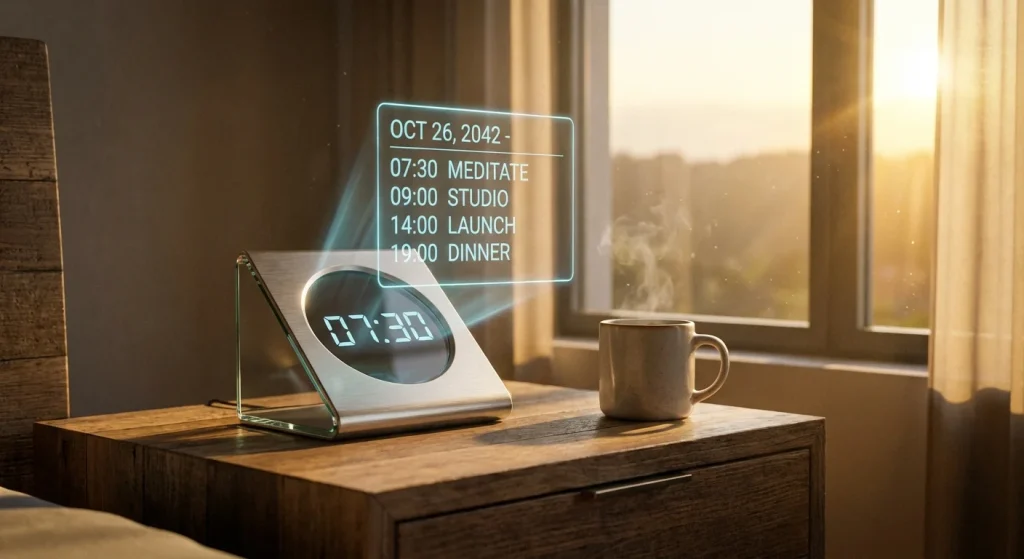
My prompt looked something like this: ‘You are now my strict, uncompromising high-performance coach. I need a minute-by-minute morning routine from 6:00 AM to 8:30 AM. My goals are maximizing deep work focus, getting 20 minutes of intense physical activity, and eating a high-protein breakfast. Remove all unnecessary decisions. Tell me exactly what to do, and at what time. Do not give me options; give me commands.’ The AI spit out a ruthless, perfectly orchestrated timeline. I synced it to my phone’s calendar, set up recurring alarms, and prepared for the experiment.
Day one was brutal. The alarm went off at exactly 6:00 AM. Instead of my usual snooze, my phone buzzed with an AI-generated notification: ‘6:00 AM: Feet on the floor. Drink 16oz of water with a pinch of salt. No phone screen until 7:30 AM.’ I grumbled, but I obeyed. The AI had scheduled a 20-minute High-Intensity Interval Training (HIIT) session at 6:15 AM, followed by a cold shower at 6:35 AM. Because I didn’t have to decide whether I was going to the gym or what workout to do, the friction was gone. The AI had already chosen a kettlebell routine. By the end of the first week, I felt like a machine. I was exhausted from the abrupt change in circadian rhythm, but something magical was happening: I wasn’t wasting time. I was completing my entire morning checklist before I usually even got out of bed.
By the second week, the initial shock wore off, and the ‘algorithmic flow’ kicked in. Because the AI had removed the burden of choice, I found myself experiencing a strange sense of freedom. I didn’t have to worry about what I was having for breakfast; the AI had created a rotating 5-day menu of high-protein meals and generated the grocery list the Sunday prior. The most profound change happened at 7:30 AM. The AI scheduled a ‘Deep Work Block’ for 60 minutes before I was allowed to check a single email or look at a slack message. It assigned this time specifically to the hardest, most cognitively demanding task of my day. In the past, I would procrastinate on this task until 2:00 PM, at which point it would take me three hours to complete due to brain fog. By tackling it at 7:30 AM while my mind was fresh and heavily caffeinated, I was finishing massive projects in under an hour.
You might be reading this and wondering, ‘How on earth did you gain 10 hours a week just by changing your morning routine?’ It sounds like a hyperbole, but the math is staggeringly real. When you eliminate micro-delays, they compound massively. Here is exactly how the time savings broke down.
| Daily Activity | Before AI (Time Wasted) | After AI (Optimized) | Time Saved (Per Week) |
|---|---|---|---|
| Morning Doomscrolling | 35 mins daily | 0 mins | ~2.9 hours |
| Deciding What to Wear & Eat | 20 mins daily | 0 mins (pre-planned) | ~1.6 hours |
| Completing Hardest Task | 3 hours (afternoon slump) | 1 hour (morning deep work) | ~5 hours |
| Inefficient Commuting | 45 mins (hit traffic) | 35 mins (AI timed departure) | ~0.8 hours |
| Total Weekly Time Saved | 10.3 Hours | ||
By automating the trivial decisions and perfectly timing my deep work, I was effectively buying back an entire working day every single week. I used those extra 10 hours to read, spend uninterrupted time with my family, and finally start a side business I had been putting off for years.
Stop wasting time trying to engineer the perfect prompts—get instant access to a bundle of over 100 specialized AI bots designed to optimize your productivity, wealth, and daily routines.
If you are tired of waking up feeling behind, you can replicate this experiment today. You don’t need to be a tech genius. Follow these steps:
After 30 days, I can confidently say I will never go back to my old mornings. I didn’t lose my humanity or become a robot; rather, by letting AI handle the trivial logistics of my morning, I freed up my mental energy for the things that actually make me human: creativity, deep thought, and presence. AI is often feared as something that will take our jobs or make us lazy, but when utilized as a personalized life architect, it is the ultimate tool for reclaiming your most valuable asset: time.
Both ChatGPT (OpenAI) and Claude (Anthropic) are excellent for this. Claude tends to have a slightly more natural, conversational tone and is great at synthesizing complex instructions, while ChatGPT is incredibly fast and can easily format schedules into downloadable tables or calendar events.
No, and I wouldn’t recommend it. I instructed the AI to generate a Monday-Friday high-performance routine. For the weekends, I asked the AI to generate a ‘recovery routine’ which focused on later wake times, outdoor walks, and completely unstructured creative time. You have to let your brain rest.
Life happens. The goal of the AI routine isn’t to punish you if you stray, but to provide a default path. When I had a morning where the dog got sick or an urgent family matter arose, I simply dealt with it. Because the routine was documented, it was infinitely easier to jump right back into the schedule the next day without feeling completely derailed.
Paradoxically, no. It is actually much more exhausting to constantly negotiate with yourself (‘Should I work out now or later? What should I eat?’). By removing the negotiation, you preserve your mental energy. You aren’t thinking; you are just doing. The relief of not having to decide is profound.
You have to build environmental friction. Put your phone across the room so you have to physically get out of bed to turn off the alarm. I also used app blockers that literally locked me out of social media and email until the AI’s scheduled ‘Deep Work’ block was over. Willpower is flawed; environmental design is foolproof.