 11
11
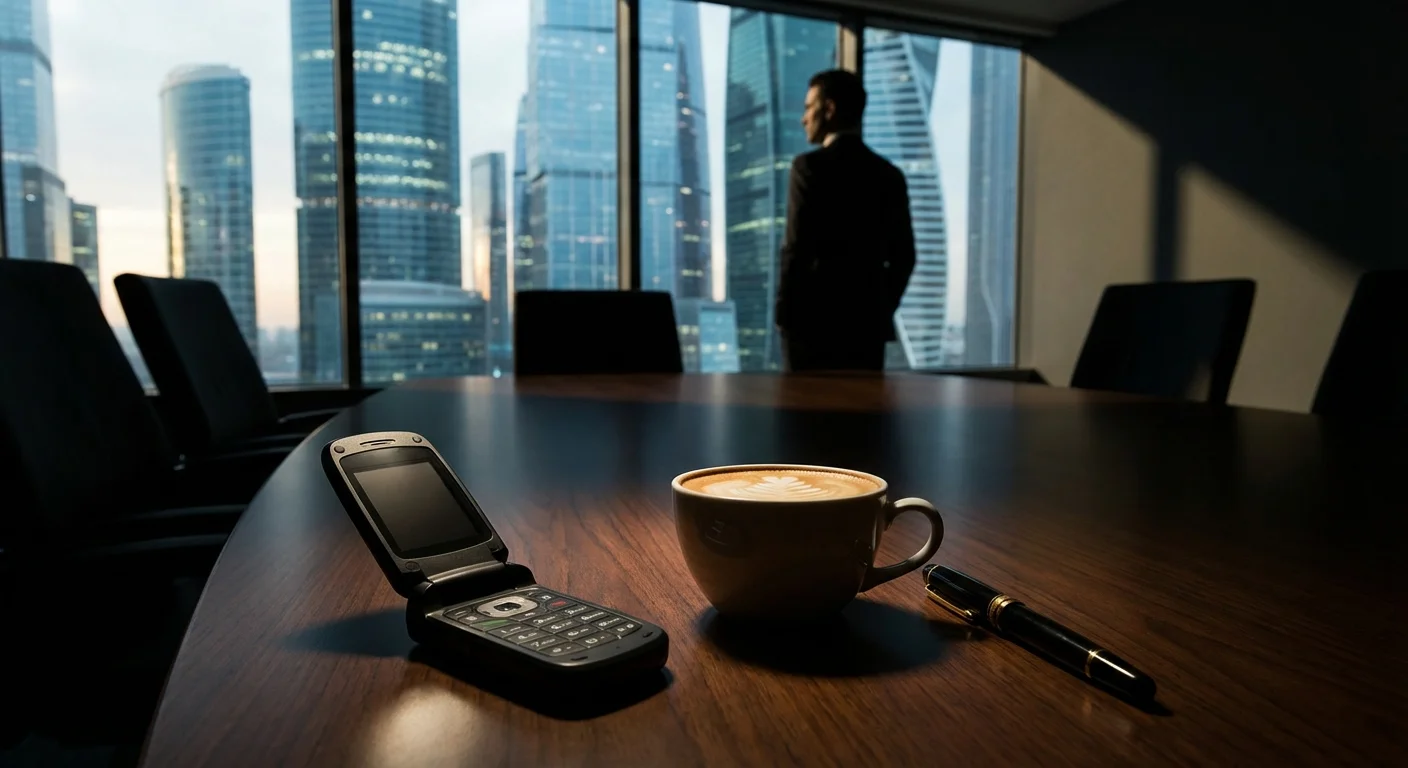
Picture this: You are sitting in a sleek, sun-drenched artisanal coffee shop in the heart of Palo Alto, California. At the table next to you sits a prominent venture capitalist who just closed a multi-million dollar funding round for a new artificial intelligence startup. You expect them to pull out the latest, top-tier iPhone 15 Pro Max to check their flooded inbox. Instead, they reach into their tailored blazer and pull out a chunky, plastic, $50 Nokia flip phone. They glance at a pixelated text message, snap the phone shut with a satisfying clack, and return to their notebook. This is not an isolated incident. Across Silicon Valley, a quiet but powerful rebellion is brewing among the very tech elites who built our hyper-connected world: they are abandoning their smartphones for ‘dumb phones.’
To understand why the architects of the digital age are suddenly logging off, you have to understand the ‘Attention Economy.’ For the past decade, the smartest minds in software engineering, behavioral psychology, and user interface design have been hired by tech giants with one singular goal: to keep your eyes glued to the screen for as long as possible. The infinite scroll, the pull-to-refresh mechanism, the vibrant red notification badges—none of these features were created by accident. They are meticulously designed to hack the human dopamine system, mirroring the psychological mechanisms of a casino slot machine.
But a funny thing happens when you know how the sausage is made: you stop eating it. Many former executives and engineers from major social media and hardware companies have been vocal about their refusal to use the very products they helped design. They understand that the modern smartphone is not a tool; it is an environment. A tool, like a hammer or a bicycle, sits patiently until you need to use it. A smartphone, however, actively demands your attention, constantly interrupting your real-world experiences with pings, vibrations, and phantom notifications.
When you swipe down to refresh a social media feed, you are engaging in what psychologists call a ‘variable ratio schedule of reinforcement.’ You never know exactly what you are going to get or how rewarding it will be. Sometimes it is a boring post from a distant relative. Other times, it is a highly engaging viral video or a message from a crush. This unpredictability causes a massive spike in dopamine, the brain’s reward chemical. Over time, your brain begins to crave this unpredictable reward, leading to compulsive checking behaviors.
For Silicon Valley executives, whose daily decisions involve millions of dollars and require deep, uninterrupted critical thinking, this fragmented attention span is disastrous. Context switching—the act of moving your attention from one task to a notification and back—has a severe cognitive cost. Studies have shown that it takes an average of 23 minutes to fully regain deep focus after a distraction. When your pocket is buzzing every five minutes, you are essentially living in a perpetual state of shallow, reactionary thinking. The $50 dumb phone is the ultimate firewall against this cognitive drain.
If you are reclaiming your focus from smartphone distractions, supercharge your mind with this breakthrough audio entrainment designed to activate your inner genius.
The transition away from smartphones does not mean these executives are going completely off the grid. Instead, they are embracing digital minimalism. The market has responded to this craving for simplicity, creating a new sub-genre of mobile devices. Some opt for the classic, retro aesthetic of a Nokia 2720 or a basic Alcatel flip phone—devices that offer nothing more than voice calls and agonizing T9 text messaging. The sheer difficulty of texting on these devices acts as a natural deterrent against prolonged screen time.
Others are turning to premium ‘minimalist phones.’ Devices like the Light Phone II or the Punkt MP02 are designed from the ground up to respect the user’s time. They feature e-ink displays, sleek industrial designs, and an intentional lack of an app store. You cannot check Instagram, you cannot doomscroll on X (formerly Twitter), and you cannot watch TikToks. You can make a call, send a text, set an alarm, and perhaps check a minimalist calendar or map. They are tools in the truest sense of the word, returning the phone to its original purpose: a utility for communication, not a portal for endless entertainment.
Why make the switch? For high-level executives, the return on investment (ROI) of a $50 dumb phone is astronomically high. When you remove the constant barrage of emails, news alerts, and social media updates, you reclaim hours of lost time every single day. This reclaimed time translates into ‘Deep Work’—a term popularized by author Cal Newport, describing the ability to focus without distraction on a cognitively demanding task.
Beyond productivity, there are profound mental health benefits. The modern smartphone connects us to the anxieties of the entire globe. A simple glance at a news app can induce a state of low-level panic. By severing this constant tether to the digital world, dumb phone users report drastically lower stress levels, improved sleep quality (due to the lack of blue light and late-night scrolling), and a profound reconnection with the physical world around them. They find themselves looking up at architecture, engaging in spontaneous conversations with strangers, and actually tasting their food rather than photographing it.
| Feature | Modern Smartphone | $50 Dumb Phone |
|---|---|---|
| Cost | $1,000 – $1,500+ | $30 – $100 |
| Battery Life | 12 – 24 Hours | 3 Days to 2 Weeks |
| Primary Function | Entertainment, Internet, Apps | Voice Calls, Basic SMS |
| Dopamine Release | High (Engineered Addiction) | None (Utilitarian) |
| Cognitive Load | Heavy (Constant Context Switching) | Light (Single-Tasking) |
You don’t have to be a tech billionaire managing a venture capital fund to benefit from this movement. However, completely ditching a smartphone in a world that practically requires one (QR code menus, mobile banking, two-factor authentication, ridesharing) can seem incredibly daunting. Here is how the pros handle the transition without completely disconnecting from modern society.
As our world becomes increasingly saturated with artificial intelligence, augmented reality, and ever-more immersive digital ecosystems, the divide between the hyper-connected and the intentionally disconnected will only grow wider. Choosing to use a dumb phone is no longer viewed as being a ‘luddite’ or being out of touch. In elite circles, it is rapidly becoming the ultimate status symbol. It broadcasts a powerful message: ‘My time and attention are far too valuable to be given away for free to tech algorithms.’
Ultimately, swapping your smartphone for a dumb phone is not about hating technology. It is about demanding a healthier relationship with it. It is about ensuring that technology serves you, rather than you serving as the product for advertisers. Whether you go all-in on a $50 plastic flip phone or simply start leaving your iPhone in another room, the journey toward digital minimalism offers a profound reward: giving you your life back.
It depends on the device. True ‘dumb phones’ do not support WhatsApp. However, ‘feature phones’ running on the KaiOS operating system (like the Nokia 2720 Flip or Nokia 8000 4G) do support basic versions of WhatsApp, allowing you to send messages and make voice calls without giving you access to an endless feed or a distracting app store.
This is one of the biggest hurdles. Many users opt to keep a dedicated GPS device (like a Garmin) in their vehicle. Alternatively, some premium minimalist phones like the Light Phone II offer basic, text-based navigation tools. Another retro solution: looking up the directions on your laptop before you leave the house and writing them down on a sticky note!
If you switch to a basic flip phone, you will likely need a separate MP3 player, such as an old iPod or a modern Sony Walkman. However, devices like the Light Phone II have a built-in tool for podcasts and music, allowing you to upload audio files via a web dashboard, ensuring you have entertainment without algorithms dictating what you listen to next.
Not necessarily. You can ask your carrier for a secondary SIM card linked to the same number, or simply swap your physical SIM card between your smartphone and your dumb phone depending on the day. Another popular method is keeping the smartphone connected only to Wi-Fi at home for banking and authenticated apps, while taking the dumb phone out into the world.
You might miss a few memes, but you will rarely miss anything truly important. If there is a massive news event, you will likely hear about it from people around you or when you log onto your computer. As for social events, friends who truly want you there will learn to send a direct SMS or call you rather than relying on a Facebook event invite.
Most basic flip phones do not have cameras capable of scanning QR codes. Dumb phone users usually politely ask the waiter for a physical menu. Most establishments still keep physical menus on hand for accessibility reasons, and waiters are generally happy to oblige.