
 11
11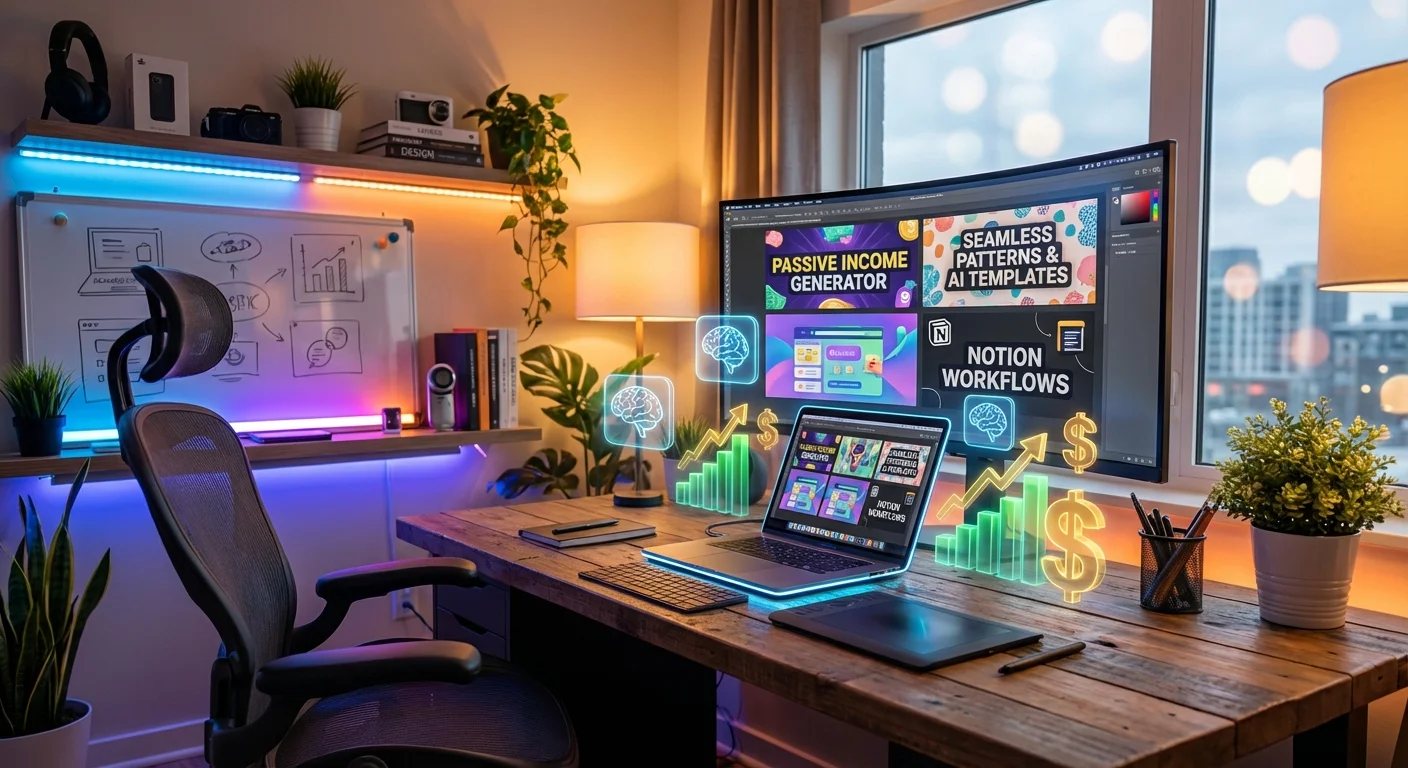
Remember when slapping together a basic weekly planner on Canva and tossing it onto Etsy was a guaranteed way to make $500 a month in effortless passive income? You would watch the cha-ching notifications roll in while sipping coffee, feeling like you had unlocked the ultimate internet money cheat code. Unfortunately, those days are officially over. The Etsy digital products marketplace is currently flooded with millions of nearly identical Canva templates. If you are still trying to sell wedding invitations, budgeting spreadsheets, or standard Instagram templates without a massive existing audience, you are likely hearing absolute crickets.
But do not close your Etsy shop just yet. A new digital gold rush has arrived, and it is entirely powered by Artificial Intelligence. Savvy, top-tier sellers have quietly stopped competing in the overly saturated Canva template market. Instead, they have pivoted to highly specific, incredibly valuable AI-generated digital products that buyers are actively searching for. The best part? These modern products require zero shipping, boast incredible profit margins, and take a fraction of the time to create compared to traditional digital art. Let us dive into why the old model is broken and exactly what you should be creating today.
Before we dive into what is actually working, we need to address why Canva templates are failing so miserably for new sellers. The barrier to entry is virtually non-existent. When literally anyone can open a free Canva account, grab a pre-made template, tweak the colors slightly, and list it on Etsy for $1.50, it creates a devastating race to the bottom. You are forced to compete entirely on price, which destroys your profit margins and cheapens your brand.
Furthermore, Etsy’s search algorithm heavily favors unique, high-conversion items. When prospective buyers search for ‘Instagram templates’ and see 50,000 completely identical results, decision fatigue sets in. To succeed on Etsy in 2024 and beyond, you need to offer products that possess a massively high perceived value, solve a highly specific problem, and look incredibly difficult to make—even if an AI system actually did the heavy lifting for you.
Crafters, small business owners, and Print-on-Demand (POD) sellers are constantly hunting for unique, beautiful patterns to print on fabrics, wallpapers, mugs, wrapping paper, and phone cases. On Etsy, these are widely known as ‘Digital Papers’ or ‘Seamless Patterns,’ and the demand is absolutely staggering.
Using advanced AI image generators like Midjourney v6 or DALL-E 3, you can create breathtaking, high-resolution seamless patterns in mere minutes. The real secret to success here is in the prompting. By asking the AI to generate something specific like a ‘seamless repeating pattern of dark academia vintage botanical illustrations, hyper-detailed, watercolor style,’ you instantly receive a commercial-quality design that would take a human artist days to paint.
Notion has taken the productivity, academic, and business worlds by storm. While basic, visually plain Notion templates are becoming common, robust ‘AI-Powered’ Notion systems are a massive, virtually untapped market. These are comprehensive, fully integrated workspace dashboards that include built-in AI prompts, automated workflows, and niche-specific problem-solving features.
Instead of just selling another generic ‘Daily Planner,’ you can use AI to help you outline, code, and build an ‘ADHD Life Operating System’ or a ‘YouTube Content Creator Matrix.’ You can even utilize ChatGPT to generate the underlying structure, daily checklists, and specialized prompt templates that you embed directly into the Notion workspace.
Want to automate your Etsy product creation and skip the steep learning curve? Get access to an exclusive Dreamteam Bot Bundle of 100+ AI Assistants designed to do the heavy lifting for you.
The global AI boom has created a brand new, highly profitable problem: people know that AI tools are incredibly powerful, but they have absolutely no idea how to talk to them. ‘Prompt Engineering’ is now a highly sought-after skill, and busy professionals are more than willing to pay for direct shortcuts. Enter the highly lucrative world of the AI Prompt Library.
Innovative Etsy sellers are currently making thousands of dollars a month by packaging highly specific, thoroughly tested ChatGPT or Midjourney prompts into beautifully designed digital PDFs, spreadsheets, or Notion databases. For example, creating a ‘ChatGPT Prompt Bible for Real Estate Agents’ or ‘100 Midjourney Prompts for T-Shirt Designers’ taps directly into the B2B (Business to Business) market, where buyers are less price-sensitive.
The homeschooling, unschooling, and digital parenting markets are exploding globally. Parents and educators are constantly hunting for engaging, modern educational materials. In the past, creating a 50-page kindergarten workbook or a beautifully illustrated children’s storybook would take months of meticulous writing and thousands of dollars in professional illustrator fees.
Today, you can use ChatGPT to generate age-appropriate educational content, phonetic reading exercises, math problems, or whimsical short stories. Next, utilize Midjourney to create consistent, captivating, and vibrant illustrations. Combine these elements into a well-formatted PDF workbook, and you have a high-ticket printable product that parents will eagerly purchase.
To help you decide which highly profitable AI product to start your new Etsy journey with, here is a detailed breakdown of how these four products compare in terms of required effort, marketplace demand, and overall profit potential.
| Product Type | Creation Effort | Etsy Demand | Profit Margin Potential | Primary AI Tools Needed |
|---|---|---|---|---|
| Seamless Patterns | Low | High | Medium ($3-$8 per pack) | Midjourney, DALL-E 3, Upscaler |
| Notion Systems | High | Growing Rapidly | High ($15-$50 per system) | ChatGPT, Claude, Notion |
| Prompt Libraries | Medium | Very High | High ($10-$30 per guide) | ChatGPT, Midjourney |
| Educational Printables | Medium | Stable & High | Medium ($5-$15 per book) | ChatGPT, Midjourney, Canva (Layout) |
Selling digital downloads on Etsy is no longer about blindly throwing spaghetti at the wall to see what sticks. It is entirely about working smarter, analyzing market gaps, and elevating your product quality. By strategically leveraging artificial intelligence to create high-value, niche-specific digital products, you can effortlessly bypass the saturated Canva template market entirely and build a sustainable, highly lucrative passive income stream for years to come.
Yes, Etsy currently allows the sale of AI-generated art and digital products on their platform. However, transparency is absolutely critical. Etsy’s official policies strictly require sellers to disclose if AI tools were utilized in the creation process of their listed items. Furthermore, you must always ensure you have the appropriate commercial rights to the outputs from the specific AI tool you are using. For example, Midjourney explicitly requires an active paid subscription for users to hold commercial rights to the images they generate.
No, your shop will not be banned as long as you meticulously follow Etsy’s Seller Guidelines, openly disclose your use of AI in your listing descriptions, and absolutely never infringe on existing copyrights or trademarks. A common trap for beginners is using AI to generate images of copyrighted characters (like Disney princesses, Marvel heroes, or anime characters) and attempting to sell them. This constitutes intellectual property theft and will lead to an immediate, permanent shop suspension. Always generate original, unbranded concepts.
Not necessarily. While a paid Midjourney subscription (which runs around $10 to $30 a month) is highly recommended for creating top-tier, competitive visual products like seamless patterns and educational printables, you can easily start with the free versions of ChatGPT or Claude for text-based products like prompt libraries and Notion architectures. As your Etsy shop grows and generates organic revenue, you can reinvest your profits into better AI subscriptions and advanced upscaling software.
Etsy’s platform allows you to upload up to 5 individual files per listing, with a maximum size of 20MB each. If your AI-generated products—such as high-resolution pattern bundles, massive PDF workbooks, or interactive Notion templates—exceed this strict file limit or require external web links, there is a simple workaround. You simply design a beautiful, branded, one-page PDF containing a stylized download link (e.g., a secure Google Drive folder link, a Dropbox link, or the duplicate link for the Notion template) and upload that single PDF document directly to Etsy for the customer to download upon purchase.
It is crucial to remember that Etsy is fundamentally a search engine, so your overall success depends heavily on your SEO (Search Engine Optimization) strategy. If you conduct proper market research, target low-competition, long-tail keywords, and invest time in creating stunning, click-worthy listing images, you could potentially see your first organic sales within a few short weeks. Consistency is the true key to long-term success on the platform—aim to upload high-quality, well-optimized listings on a regular schedule rather than dumping 100 low-effort, poorly titled items onto your shop all at once.