
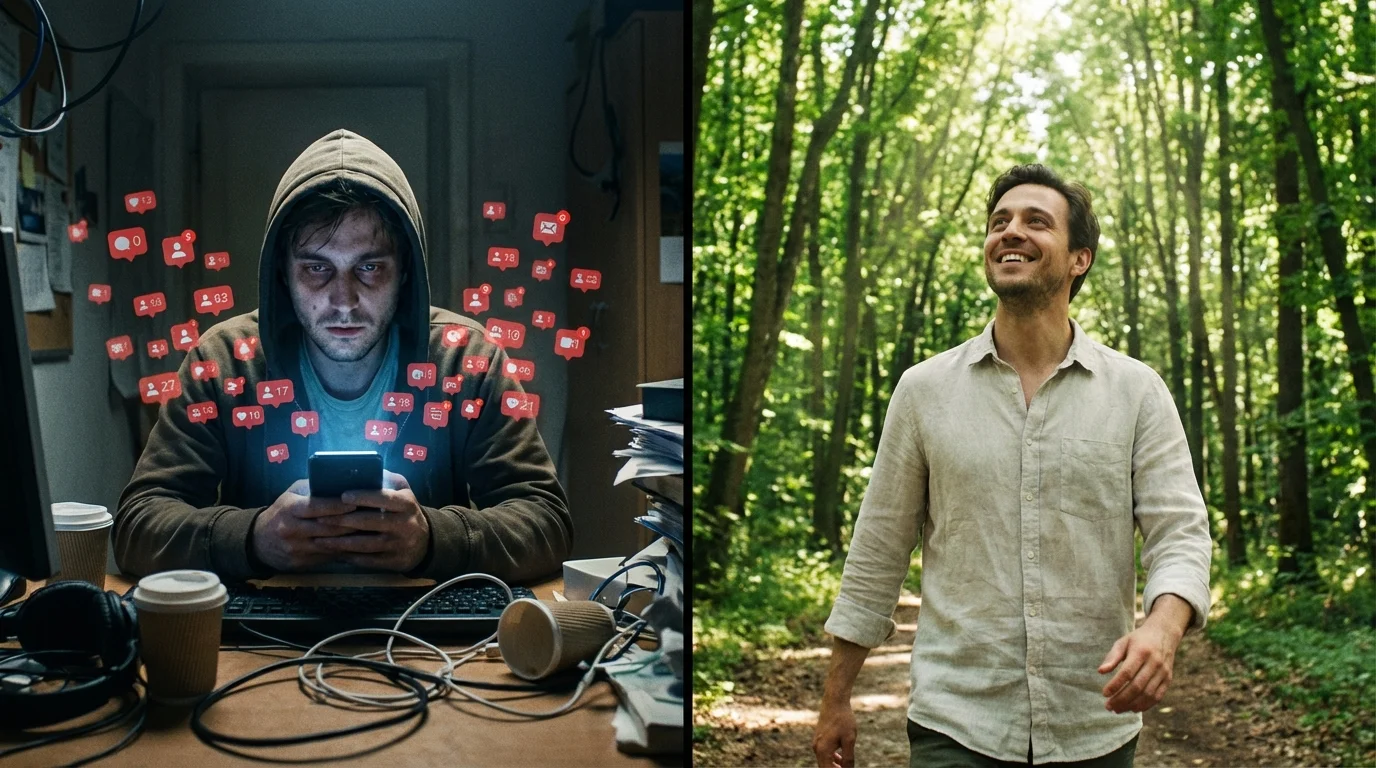
It was 11:47 PM on a Tuesday. The blue light from my smartphone cast a ghostly glow across my face as my thumb mindlessly swiped upward for the hundredth time. I was exhausted, stressed, and completely burned out from my day, yet I couldn’t stop scrolling. I was caught in a digital loop, searching for a dopamine hit that never truly arrived. When I woke up the next morning feeling more fatigued than when I went to sleep, I knew something had to change. The constant barrage of notifications, the endless comparison traps, and the sheer volume of digital noise had pushed my brain to its absolute limit.
The Breaking Point: Recognizing Digital Burnout
We often associate burnout with overworking at our jobs, but the truth is, modern burnout is frequently fueled by our digital habits. The term ‘digital burnout’ refers to the specific state of mental, emotional, and physical exhaustion caused by prolonged exposure to digital devices and online environments. My symptoms were classic: chronic brain fog, an inability to concentrate on a single task for more than five minutes, disrupted sleep patterns, and a low-grade, constant hum of anxiety. My phone wasn’t just a tool anymore; it was a digital parasite feeding on my attention and energy.
I decided to take drastic action. I had read about the concept of digital minimalism, popularized by author Cal Newport, and decided to plunge into a 30-Day Digital Declutter Challenge. The rules were simple but strict: for 30 days, I would remove all optional technologies from my life. If an app wasn’t absolutely critical for my daily survival or professional duties, it was getting deleted from my phone. I wanted to see what would happen to my brain when it was finally starved of cheap, artificial dopamine.
The 5 Culprits: The Apps That Had to Go
When evaluating my screen time data, the results were horrifying. I was spending upwards of six hours a day on my phone, and the vast majority of that time was concentrated in just five apps. Deleting these five specific applications was the core of my challenge, and it proved to be the ultimate cure for my burnout.
1. The Infinite Scroll Machine: TikTok
TikTok is an engineering marvel designed to hack your attention. Its algorithmic ‘For You’ page creates a frictionless experience where time simply evaporates. I realized I was using TikTok as an emotional pacifier. Whenever I felt slightly bored or stressed, I would open the app and lose 45 minutes. Deleting TikTok was the hardest but most crucial step. It was the primary source of my fragmented attention span, training my brain to expect a new, highly stimulating narrative every 15 seconds.
2. The Comparison Trap: Instagram
If TikTok was stealing my time, Instagram was stealing my joy. My feed had become a carefully curated highlight reel of other people’s successes, vacations, and seemingly perfect lives. Even though I logically knew these images were filtered and staged, the primitive part of my brain constantly felt inadequate. This social comparison was a massive, silent contributor to my burnout. By deleting Instagram, I immediately eliminated the exhausting subconscious pressure to measure up to impossible standards.
3. The Outrage Generator: X (Formerly Twitter)
X is the town square, but it’s a town square where everyone is shouting at the top of their lungs about the end of the world. The constant exposure to polarizing debates, doomscrolling news, and performative outrage kept my nervous system locked in a permanent state of fight-or-flight. Cortisol, the stress hormone, spikes when we consume negative news. Removing X from my phone was like stepping out of a noisy, aggressive nightclub into a quiet, serene forest. The silence was deafening, but deeply healing.
4. The Fake Urgency Trap: Slack (Mobile Version)
This was a controversial deletion. Slack is an essential communication tool for my work, but having it on my phone meant I was never truly off the clock. A ping at 8:00 PM while cooking dinner would immediately snap my brain back into ‘work mode,’ spiking my adrenaline and ruining my evening relaxation. By deleting the mobile app, I forced myself to only check work messages during designated hours on my laptop. This created a solid, impenetrable boundary between my professional and personal life, a boundary that is absolutely essential for curing burnout.
5. The Productivity Illusion: YouTube
YouTube is a tricky one. Unlike the others, it feels productive. I was constantly watching videos on ‘how to be more productive,’ ‘morning routines of billionaires,’ and ‘self-improvement hacks.’ But consuming content about doing the work is not the same as actually doing the work. It was a form of productive procrastination that left me feeling overwhelmed by all the things I ‘should’ be doing. Deleting the mobile app forced me to stop consuming and start doing.
The Withdrawal Phase: The First 7 Days
I won’t sugarcoat it; the first week was brutal. I experienced genuine withdrawal symptoms. My thumb would instinctively twitch toward the empty spaces on my home screen where the apps used to be. I felt a phantom vibration syndrome, checking my pockets for notifications that weren’t there. The most surprising emotion was a profound sense of loneliness and boredom. Without the constant digital chatter, I was forced to sit alone with my own thoughts, which was incredibly uncomfortable at first. My brain was screaming for its usual dopamine fix.
The Awakening: Days 8 to 30
By the second week, something miraculous began to happen. The mental fog started to lift. My attention span, which had been reduced to the length of a short-form video, began to stretch out. I could sit and read a physical book for an hour without feeling the urge to check my phone. The low-grade anxiety that had been my constant companion slowly dissipated.
Instead of waking up and immediately flooding my brain with the world’s problems, I started waking up slowly. I drank my coffee while looking out the window instead of staring at a screen. I started noticing the texture of the real world again. Most importantly, my energy levels rebounded. Without the constant emotional rollercoaster of social media and the stress of always being reachable, my nervous system finally had a chance to repair itself.
The Results: Before and After the Declutter
To truly understand the impact of this 30-day challenge, I tracked a few key metrics regarding my lifestyle, mood, and productivity. The transformation was nothing short of astonishing.
| Metric | Before the Challenge | After 30 Days |
|---|---|---|
| Average Daily Screen Time | 6 hours 15 minutes | 1 hour 20 minutes |
| Books Read per Month | 0 | 3 |
| Sleep Quality (Self-Rated) | Poor (Restless, waking often) | Excellent (Deep, uninterrupted) |
| Focus Duration | 15-20 minutes maximum | 90-120 minute deep work blocks |
| Overall Stress Levels | High (Constant edge) | Low (Calm and present) |
As you can see from the table, the 30-day challenge completely rewired my daily life. It wasn’t just about saving time; it was about saving my sanity. I reclaimed nearly five hours of my day that had previously been stolen by algorithms. That time was redirected into exercise, cooking, connecting with friends in person, and simply allowing myself to rest.
Unlock Deep Focus and Eliminate Brain Fog
Supercharge your newly decluttered mind and activate your theta waves for effortless focus and stress relief.
Reintroducing Technology on My Own Terms
The goal of a digital declutter isn’t to become a luddite and swear off technology forever. Technology is a powerful tool when used intentionally. On day 31, I had to decide which apps to let back into my life. The surprising truth? I didn’t want most of them back. I permanently deleted TikTok and X. I reinstalled Instagram, but with a strict 15-minute daily timer enforced by my phone’s operating system. Slack stayed off my phone entirely; it remains a desktop-only application.
By resetting my baseline, I cured my burnout. I am no longer a passive consumer of digital junk food. I am an active participant in my own real, physical life. If you are feeling exhausted, overwhelmed, and entirely burned out, I highly encourage you to take the 30-Day Digital Declutter Challenge. It might just be the most important reset button you ever press.
Frequently Asked Questions About the Digital Declutter
What exactly is a digital declutter?
A digital declutter is a designated period of time, usually 30 days, during which you voluntarily step away from optional digital technologies. This includes social media, news sites, video streaming on your phone, and unnecessary messaging apps. The goal is to break compulsive habits and reset your relationship with technology.
What do I do if I need these apps for work?
The rule of the declutter is to remove *optional* technologies. If an app is strictly required for your income, keep it. However, establish strict boundaries. Remove the mobile versions if possible, and only access them on a computer during specific work hours. Do not let work apps bleed into your personal evening or weekend time.
Will I miss out on important news or social events?
This is a common fear, often called FOMO (Fear Of Missing Out). In reality, truly important news will reach you through friends, family, or the radio. As for social events, true friends will text or call you directly. You’ll quickly find that most of what you ‘miss’ on social media is entirely inconsequential to your actual happiness.
What should I do with all my newfound free time?
During the first few days, you will likely feel bored. Embrace it! Boredom is the birthplace of creativity. Use this time to rediscover old hobbies, read physical books, go for long walks without headphones, cook complex meals, or simply learn to sit in silence and process your own thoughts. Have a list of high-quality offline activities ready before you start the challenge.
How do I prevent relapsing after the 30 days are over?
The end of the 30 days is not a finish line; it’s a new beginning. Before re-downloading any app, ask yourself: ‘What specific value does this bring to my life?’ and ‘How will I use this without falling back into old habits?’ Reintroduce apps slowly, one at a time, and utilize screen time limits and app blockers to maintain your new, healthy boundaries.